
Tal to an Expert ( Team )

 Best price guaranteed No booking fees Safe Trip Plan
Based on 341 Reviews
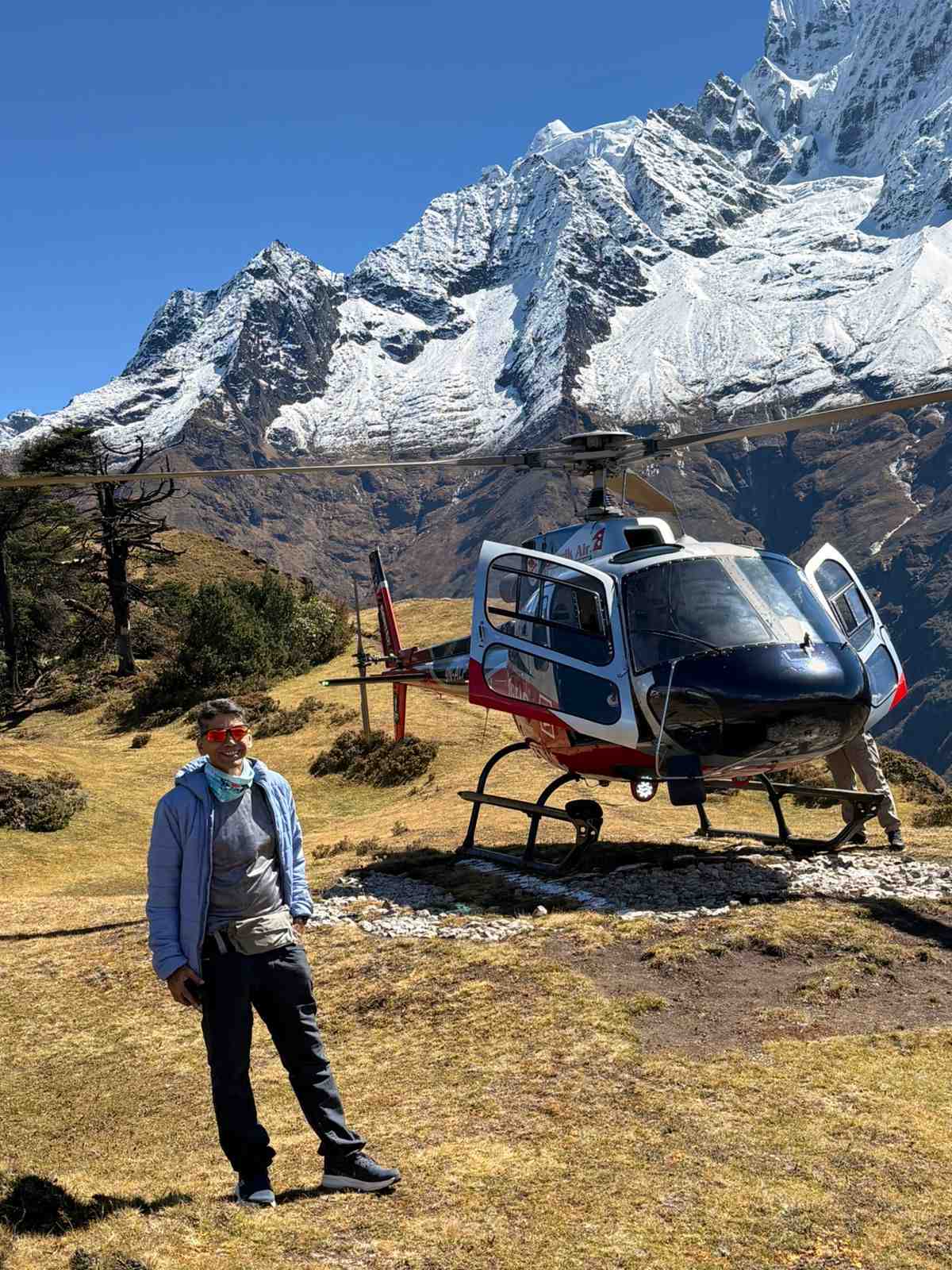
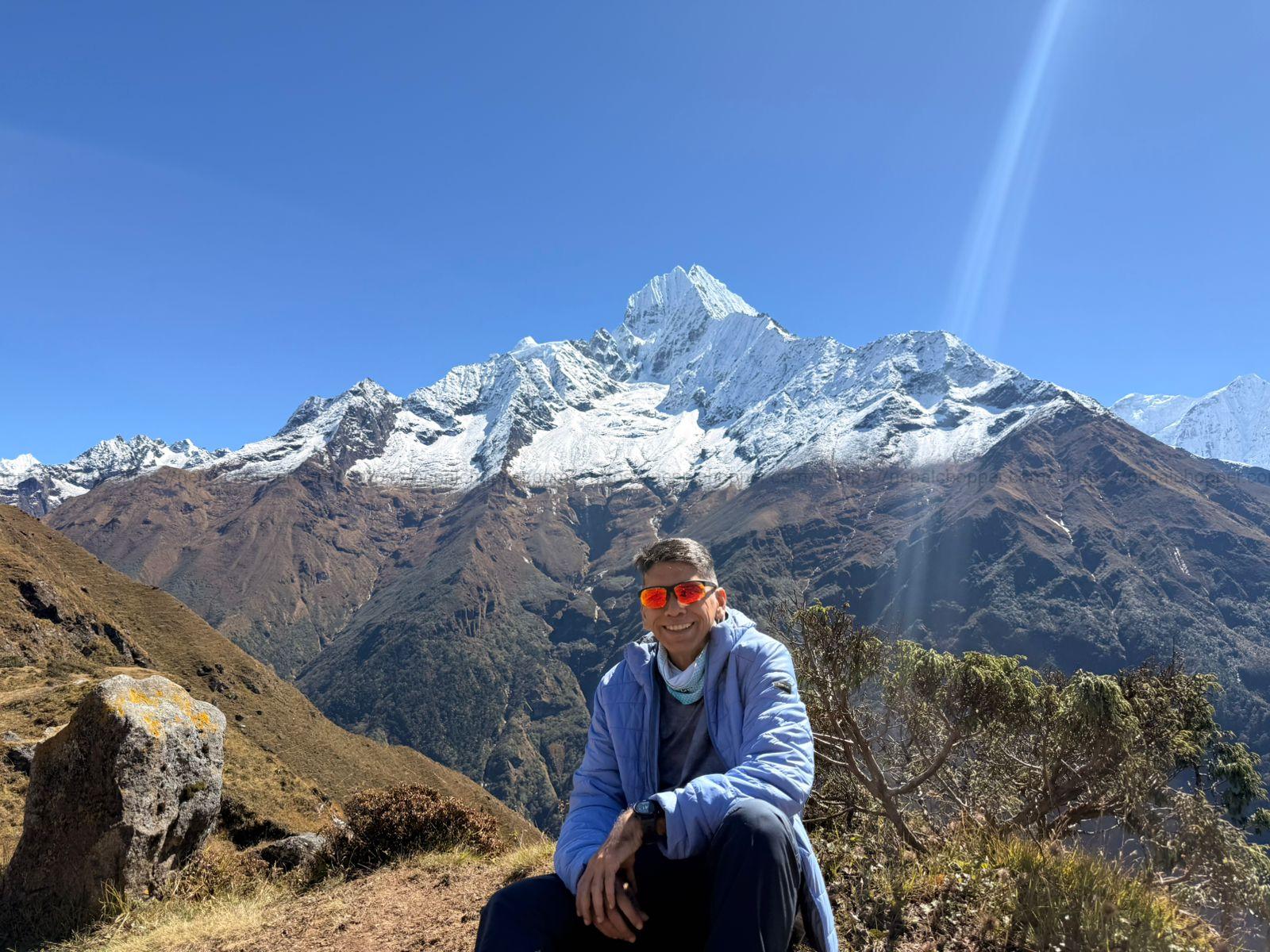
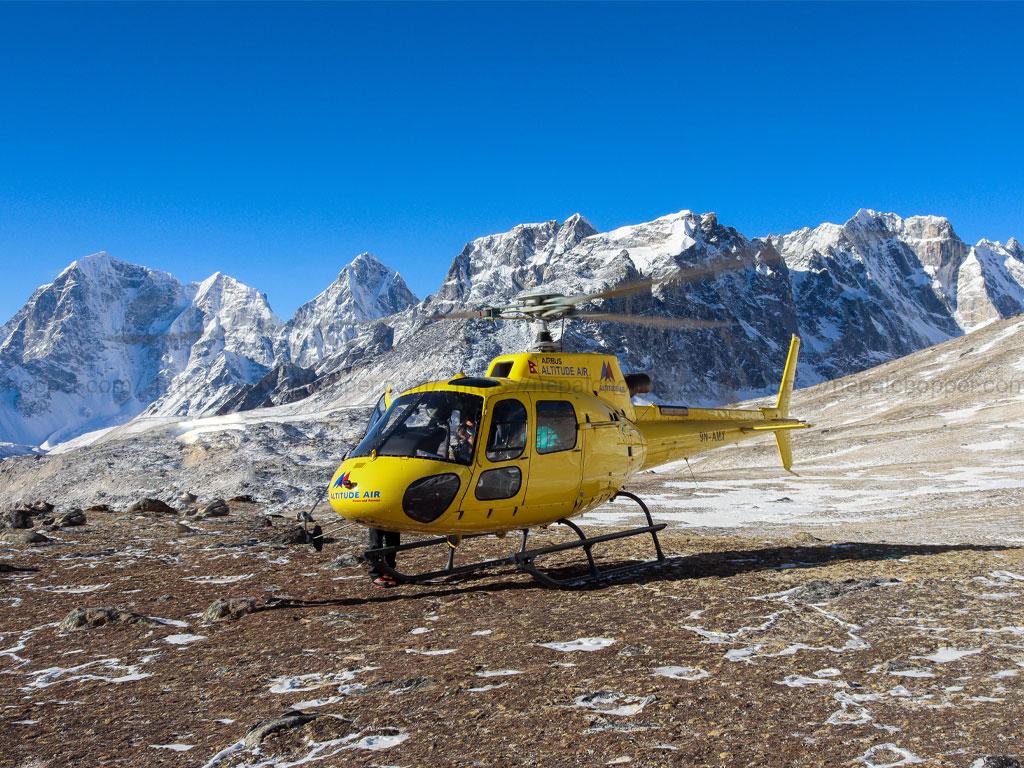
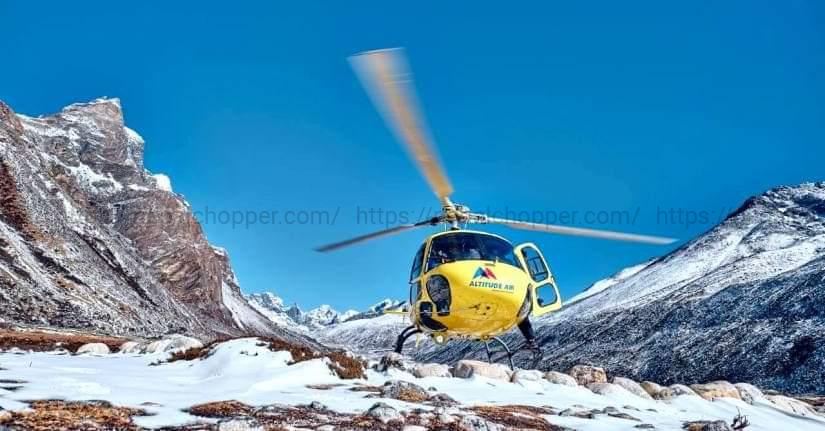
The Private Mount Everest Helicopter Tour from Kathmandu is the ultimate luxury Himalayan experience, designed for travelers who want to witness the majesty of the world’s highest mountain, Mount Everest (8,848.86m), in maximum comfort and minimum time. This exclusive Everest Base Camp Helicopter Tour sharing offers a once-in-a-lifetime opportunity to soar above dramatic glaciers, deep valleys, ancient Sherpa villages, and the legendary Khumbu Icefall, all in a single breathtaking flight. With a private charter, you enjoy complete privacy, flexible timing, guaranteed window seats, and personalized service from takeoff to landing. Weather permitting, the tour includes a thrilling landing at Kala Patthar, the most famous viewpoint of Everest, where you can step out for close-up photographs of Everest, Lhotse, Nuptse, and Pumori. You will also enjoy a luxury breakfast at the world’s highest-altitude hotel with panoramic mountain views, making this journey not just a flight but a fully immersive Himalayan luxury experience. Ideal for couples, families, VIP travelers, senior guests, photographers, and time-limited adventurers, this tour combines adventure, comfort, safety, and exclusivity into one unforgettable day. Whether you dream of standing face-to-face with Everest or capturing aerial views of the entire Everest region, this premium helicopter tour delivers the most spectacular and efficient way to experience the roof of the world.
The Private Mount Everest Helicopter Tour from Kathmandu is the ultimate luxury adventure to witness the world’s highest mountain, Mount Everest (8,848.86m), in just a few hours. This exclusive Everest Base Camp Helicopter Tour allows you to fly over glaciers, land at Kala Patthar (weather permitting), explore Everest Base Camp from the sky, and enjoy breakfast at the world’s highest luxury hotel.
| Highlight | Details | Altitude | Notes |
|---|---|---|---|
| Kathmandu Departure | Helicopter departs from Kathmandu Airport early morning for clear views. | 1,400 m (4,600 ft) | Best time: 6:30–9:00 AM for minimal turbulence and clear skies. |
| Lukla | Fly over scenic valleys and land in Lukla, gateway to Everest region. | 2,860 m (9,383 ft) | Short landing for photos and to experience Lukla airport view. |
| Namche Bazaar (Optional) | View the Sherpa capital from the air; can land for quick sightseeing. | 3,440 m (11,286 ft) | Experience local Sherpa village culture from the sky. |
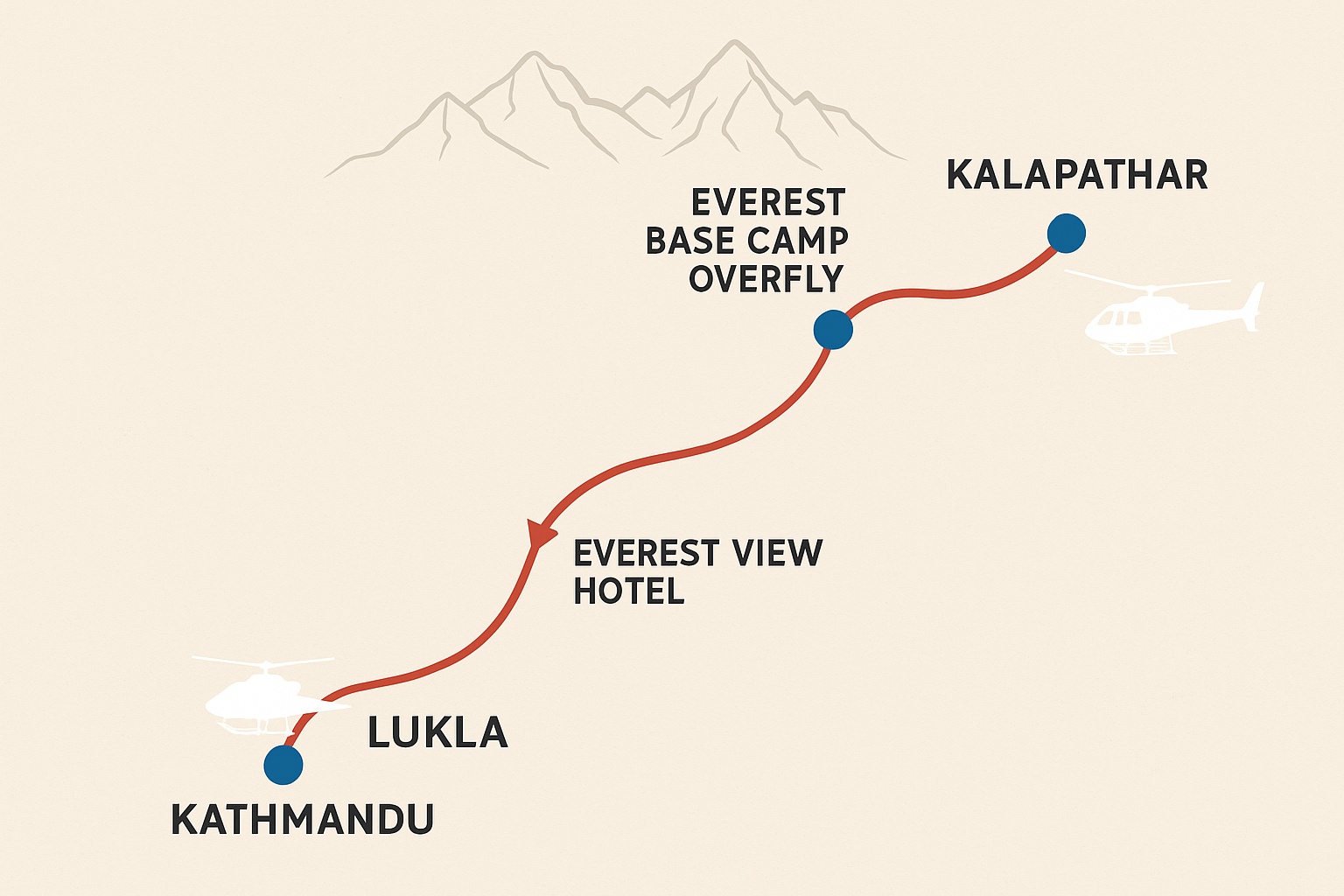
| Everest Base Camp (Overflight) | Fly closely over EBC to witness glaciers, Everest, Lhotse, and Nuptse. | 5,364 m (17,598 ft) | No landing due to safety; perfect for photography and sightseeing. |
| Kalapathar | Helicopter can land near Kalapathar for the best panoramic Everest views. | 5,545 m (18,192 ft) | Ideal for sunrise/sunset photos; short walk to viewpoint. |
| Everest View Hotel | Land at the world’s highest hotel to enjoy breakfast or tea with mountain vistas. | 3,880 m (12,730 ft) | Optional stop; offers Sherpa culture, tea house experience, and amazing views. |
| Return to Kathmandu | Fly back through the scenic Khumbu valley and mountains to Kathmandu. | 1,400 m (4,600 ft) | Enjoy aerial photography of rivers, valleys, and Himalayan peaks. |
The Private Everest Helicopter Tour begins early in the morning with a hotel pick-up around 5:30 AM, followed by a short transfer to Tribhuvan International Airport (Domestic Terminal) in Kathmandu. By 6:30 AM, the helicopter takes off for Lukla (2,860 m), offering breathtaking aerial views of the Kathmandu Valley, rolling hills, and the lower Himalayan peaks. After a brief stop in Lukla around 7:15 AM for refueling and a short break, the flight continues deeper into the mountains, heading towards Pheriche (4,200 m). From here, a short shuttle takes you to Kala Patthar, where the helicopter can safely land for 5–10 minutes, allowing passengers to capture spectacular, close-up views of Mount Everest, Lhotse, and the surrounding Khumbu peaks.
Around 8:45 AM, the helicopter flies to the Hotel Everest View (3,880 m), perched near Namche Bazaar, where guests can enjoy a scenic breakfast with unparalleled views of Everest and Ama Dablam. After soaking in the majestic Himalayan panorama and capturing memorable photographs, the return journey begins at 9:45 AM, flying back via Lukla to Kathmandu. The tour concludes around 10:30–11:00 AM with a hotel drop-off in Kathmandu. This private itinerary provides a safe, fast, and luxurious way to experience Everest without the need for strenuous trekking, making it ideal for travelers with limited time, adventure enthusiasts, photographers, or anyone seeking an unforgettable Himalayan experience.
| Time | Activity |
|---|---|
| 05:30 AM | Hotel pick-up and transfer to Tribhuvan Airport (Domestic Terminal). |
| 06:30 AM | Flight from Kathmandu to Lukla (2,860 m) with stunning aerial views. |
| 07:15 AM | Refuel at Lukla, short break before flying higher into the mountains. |
| 08:45 AM | Fly to Pheriche (4,200 m) and shuttle to Kala Patthar. |
| 09:15 AM | Land at Kala Patthar (5,545 m) for 5–10 minutes to capture close-up Everest views. |
| 09:45 AM | Fly to Hotel Everest View (3,880 m) for breakfast overlooking Mount Everest. |
| 10:45 AM | Return flight via Lukla to Kathmandu. |
| 12:30–1:00 PM | Arrive Kathmandu, transfer back to your hotel. |
The Private Everest Helicopter Tour offers a once-in-a-lifetime opportunity to explore the majestic Everest region in comfort and style. The total cost of a private helicopter charter depends on several factors, including the number of passengers, the flight route, and the specific inclusions you choose. For the 2026/2027 season, a full private charter for 1–5 passengers typically ranges from USD 4,950 to USD 6,500 per helicopter. This cost includes round-trip helicopter flights from Kathmandu to the Everest region, allowing you to enjoy spectacular aerial views of Mount Everest, Lhotse, Nuptse, and the Khumbu Glacier. Most packages include a landing at Kala Patthar, providing passengers with breathtaking close-up views and photographic opportunities, as well as a stop at the world-famous Hotel Everest Viewfor breakfast or tea while soaking in panoramic Himalayan scenery. Additional inclusions often cover airport transfers, fuel charges, helicopter permits, and landing fees, ensuring a smooth and hassle-free experience.
The price may vary depending on the season, with peak trekking periods in spring (March–May) and autumn (September–November) often seeing higher demand and slightly elevated rates. Private helicopter tours also offer flexibility in itinerary, allowing you to choose whether to return to Kathmandu or Lukla after the flight. For travelers with limited time in Nepal, business visitors in transit, or adventure enthusiasts seeking an exclusive and luxurious way to witness the Himalayas, the private Everest helicopter tour provides unmatched convenience and unforgettable views. This tour is ideal for couples, families, or small groups who want a short yet complete Everest experience without undertaking the traditional multi-day trek.
| Group Size | Total Charter Price | Cost Per Person |
|---|---|---|
| 1 Person | USD 4,800 | USD 4,800 |
| 2 Persons | USD 5,200 | USD 2,600 |
| 3 Persons | USD 5,800 | USD 1,933 |
| 4 Persons | USD 6,300 | USD 1,575 |
| 5 Persons (Maximum) | USD 6,800 | USD 1,360 |
Note: Price varies based on season, landing permission, total weight, and fuel requirement.
The best time for the Private Everest Helicopter Tour from Kathmandu is during the spring (March to May) and autumn (September to November) seasons. These months offer the most stable weather, crystal-clear mountain views, and the safest flying conditions in the Everest region. During spring, the skies are generally clear, temperatures are moderate, and the entire Himalayan range—including Mount Everest, Lhotse, Nuptse, and Ama Dablam—appears sharp and majestic. This season is also popular with Everest climbers, making the aerial view of Base Camp especially exciting with colorful expedition tents visible below.
Autumn is equally excellent and often considered the best overall season due to sharp visibility after the monsoon rains, calm winds, and dry conditions. The air is fresh, the skies are deep blue, and photo opportunities are at their absolute best. This is the peak season for luxury Everest helicopter tours because of its high success rate for landings at Kala Patthar and smooth breakfast visits at Everest View Hotel.
Winter months (December to February) are also possible for the Everest Helicopter Tour on clear days. While temperatures are colder and snow may limit landings at higher points, the skies are often very clear, offering stunning mountain photography. However, winter flights are more weather-dependent.
The monsoon season (June to August) is the least recommended time for Everest helicopter tours due to heavy cloud cover, rainfall, poor visibility, and frequent flight delays or cancellations. Even though flights sometimes operate during short clear weather windows, the success rate is lower compared to spring and autumn.
In conclusion, if you want the highest chance of clear Everest views, safe Kala Patthar landing, smooth flight operations, and perfect photo conditions, the spring and autumn seasons are the best time for your Luxury Everest Helicopter Tour.
Short, bold marketing copy for social posts, printed flyers and website banners. Use each month as a separate poster or combine for a 12-month campaign.
| Month | Flyer / Poster Copy (Short & Promotional) |
|---|---|
| January | Snow Everest Special — Crystal clear skies and snow-covered Everest. Best for winter photography. Kala Patthar landing weather dependent. Special winter offers Perfect for snow lovers & photographers |
| February | Clear Sky Everest Flight ?️ — Cold, stable mornings and sharp mountain visibility. Fewer tourists for a more exclusive experience. Best for peaceful luxury flights |
| March | Spring Begins ? — Warmer weather returns; stable conditions and excellent views. Great early-season photography with fewer crowds. Best early-season Everest heli experience |
| April | Peak Spring Season ?️ — Best balance of temperature & visibility. Colorful Base Camp tents visible. Top month for photography & landing success. Most popular month for Everest Helicopter Tour |
| May | Everest Climbing Action ? — Active climbing season with expedition views. Blue morning skies and stunning glacier shots; slight afternoon haze possible. Best month to see real Everest climbing life |
| June | Monsoon Entry ?️ — Cloudy, rainy season begins. Lower success rate for full route; discounted helicopter prices for flexible travelers. Low cost but higher cancellation risk |
| July | Monsoon Adventure ?️ — Heavy rainfall and poor visibility. Frequent delays — only for highly flexible travelers. Cheapest season of the year. Budget-conscious & flexible travelers only |
| August | End of Monsoon ?️ — Weather improving but still unpredictable. Great budget deals; recommend flexible dates & advance booking. Transition month before peak season |
| September | Post-Monsoon Perfection — Fresh clean air, crystal-clear mountain views and smooth flying conditions. Excellent for photography. Begin the best season |
| October | Best Everest Month — Deep blue skies, calm winds, and the sharpest visibility of the year. Top choice for luxury helicopter tours and breakfast landings. Top choice for Everest Helicopter Tour |
| November | Calm & Clear — Cool temperatures and crisp visibility with fewer crowds than October. Ideal for sunrise flights. Great balance of comfort & views |
| December | Winter Luxury Begins — Cold mornings, holiday season flights, and sharp snow-covered peaks. Quiet, exclusive experiences for luxury travelers. Perfect for luxury winter travelers |
Absolutely! Cameras are highly encouraged on the Everest Base Camp helicopter tour, as the flight provides some of the most breathtaking and unobstructed views of Mount Everest, Lhotse, Nuptse, and the Khumbu Glacier. Passengers can capture close-up photos of the peaks, glaciers, and valleys from unique aerial perspectives that are impossible to experience on a traditional trek. However, drones are strictly regulated within Sagarmatha National Park. Flying a drone without a special permit is prohibited, so if you wish to use one, prior approval from the park authorities is mandatory. For casual photography, your camera or smartphone is sufficient to capture unforgettable moments of this scenic helicopter tour.
Yes, every passenger on the helicopter has excellent views of the Everest region. Unlike airplane flights where window seats are preferred, helicopter tours are designed for close-up landings at scenic locations such as Kala Patthar and the Everest View Hotel. The compact cabin and flexible seating arrangement ensure that all passengers can enjoy unobstructed views and take high-quality photographs during the flight. This makes the helicopter tour ideal for photographers, adventure enthusiasts, and families who want a front-row experience of the Himalayas without worrying about seat placement.
Yes, last-minute bookings are possible with NepalChopper, giving travelers flexibility if their plans change or if they decide to experience the Everest Base Camp helicopter tour spontaneously. However, availability is subject to helicopter schedules, passenger load, and weather conditions. It is recommended to book as early as possible, especially during the peak trekking seasons of spring (March–May) and autumn (September–November), when demand is high. Even with last-minute bookings, NepalChopper ensures smooth coordination of transfers, permits, and safety measures to provide a hassle-free and memorable Everest helicopter experience.
Experience the grandeur of Mount Everest like never before with a Private Everest Helicopter Charter from NepalChopper. This exclusive tour offers the most luxurious and time-efficient way to witness the Himalayas, combining comfort, safety, and unparalleled aerial views. Avoid the long and strenuous multi-day trek to Everest Base Camp and instead enjoy a scenic helicopter flight that brings you close to iconic peaks such as Everest, Lhotse, Nuptse, and Ama Dablam. With a private charter, you and your group have complete control over your itinerary, including stops at Kala Patthar for breathtaking panoramas, the Everest View Hotel for breakfast or tea, and optional hop-on & hop-off points along the Khumbu region. Ideal for families, couples, or small groups, this private Everest helicopter tour ensures a personalized, flexible, and unforgettable Himalayan adventure, capturing the beauty of the world’s highest mountain with comfort and ease. Book your charter today and create memories that will last a lifetime, experiencing Everest the way very few ever do.
Experience Mount Everest in the most luxurious, fastest, and most exclusive way possible. Skip the long trekking days and reach the heart of the Himalayas in just a few hours with our Private Everest Helicopter Charter.
This premium helicopter tour is ideal for:
Don’t just dream of Everest—fly to it in luxury.
Contact us today for:
Book Your Private Everest Helicopter Tour from Kathmandu Today & Create a Once-in-a-Lifetime Himalayan Memory!
 30m
30m No
No 07am: The Private Everest Helicopter Tour from Kathmandu is a perfectly timed luxury adventure designed to give you the closest possible views of Mount Everest in just a few hours. This one-day helicopter journey combines breathtaking mountain scenery, high-altitude landings, and a luxury Everest breakfast—all with maximum comfort, safety, and exclusivity. ? 05:00 – 05:30 AM | Hotel Pickup & Transfer to Kathmandu Airport Your unforgettable Himalayan adventure begins early in the morning with a private hotel pickup by Nepal Chopper’s ground team. You will be transferred comfortably to the domestic terminal of Tribhuvan International Airport. At the airport: ✅ VIP handling & security check-in ✅ Pre-flight safety briefing by your pilot ✅ Final weather & route confirmation Early morning departure is essential for the best weather, lowest wind, and clearest mountain views.
 MEALS No 45m No
 06:00 – 06:45 AM |: 06:00 – 06:45 AM | Scenic Flight from Kathmandu to Lukla or Pheriche (Refueling Stop) After takeoff, your helicopter flies east toward the Himalayas, offering spectacular aerial views of: Rolling green hills & river valleys Terraced farmland & traditional villages The Himalayan ranges of Langtang, Gaurishankar & Rolwaling You will land briefly at Lukla or Pheriche for: ✅ Fuel refilling ✅ Weather & altitude check ✅ Passenger weight re-balancing for high-altitude flight This short stop also allows you to stretch your legs and acclimatize briefly.
MEALS No 45m No 07:30 – 08:15 AM |: From Pheriche, the helicopter climbs higher toward the Khumbu Glacier, entering the heart of the Everest region. This is the most dramatic and exciting section of the flight. You will enjoy close aerial views of: ✅ Mount Everest (8,848.86m) ✅ Lhotse, Nuptse & Pumori ✅ Khumbu Glacier & Icefall ✅ Everest Base Camp from above Your pilot will slow the helicopter for safe scenic hovering, allowing you to capture high-resolution photographs and videos of the world’s most famous mountain landscape.
MEALS No 30m No 08:30 – 09:00 AM |: If weather conditions, visibility, and total passenger weight allow, your helicopter will land at Kala Patthar, the best viewpoint of Mount Everest. During this legendary stop: ✅ You step out at over 5,500 meters altitude ✅ Enjoy unmatched, face-to-face views of Everest ✅ Capture once-in-a-lifetime photos & videos ✅ Experience the true feeling of the Himalayas ⏱ Landing time is kept very brief (5–10 minutes) for safety due to extreme altitude.
MEALS No 1 hrs no 09:30 – 10:30 AM |: After descending from Kala Patthar, your helicopter lands at Everest View Hotel, the highest-altitude luxury hotel in the world. Here you will enjoy: ✅ Freshly prepared hot breakfast ✅ Tea, coffee & bakery items ✅ Panoramic views of Mount Everest, Ama Dablam & Thamserku ✅ Relaxed atmosphere with heated indoor seating This stop transforms your adventure into a true luxury Himalayan experience.
MEALS no 1.5hrs No 10:30 – 12:00 PM : After breakfast, the helicopter begins its return journey to Kathmandu, retracing the scenic Himalayan route. You will once again enjoy spectacular aerial views of: Snow peaks River gorges Mountain farms Himalayan foothills Your arrival time in Kathmandu is usually around 12:00 PM to 01:00 PM, depending on weather and air traffic.
MEALS No 1.5hrs No 12:30 – 01:30 PM : Upon landing, your private vehicle will be waiting to transfer you back to your hotel. Your once-in-a-lifetime Everest helicopter adventure concludes by early afternoon—all completed comfortably in a single day. ✅ Total Tour Duration Summary Activity Time Hotel Pickup 05:00 – 05:30 AM Kathmandu to Lukla/Pheriche 06:00 – 07:30 AM Everest Base Camp Fly-Over 07:30 – 08:15 AM Kala Patthar Landing 08:30 – 09:00 AM Everest View Hotel Breakfast 09:30 – 10:30 AM Return to Kathmandu 10:30 – 12:00 PM Hotel Drop 12:30 – 01:30 PM ✅ Total Duration 4 – 5 Hours ✅ Why This Itinerary Is Perfect ✔ No trekking required ✔ Closest possible views of Mount Everest ✔ Safe altitude exposure ✔ Luxury breakfast with Everest views ✔ Same-day return to Kathmandu ✔ Ideal for seniors, families, VIPs & time-limited travelers
MEALS NoExperience the majestic Himalayas like never before with NepalChopper’s Everest Base Camp Helicopter Tour. Enjoy a luxurious and time-efficient journey to the heart of the world’s highest peaks while learning about the essential role of oxygen and high-altitude safety measures. Whether you are a first-time visitor or an experienced traveler, our detailed guide ensures your flight is safe, comfortable, and unforgettable.
NepalChopper provides travelers with complete information regarding the Everest helicopter tour, including safety precautions, oxygen usage, and the scenic flight itinerary. Our goal is to make your holidays in Nepal enjoyable, exciting, and full of mesmerizing Himalayan experiences.
Yes. All NepalChopper pilots are highly trained and familiar with the unique challenges of flying above 5,000 meters (16,404 ft). Many are native Nepalis with decades of experience in the Everest region. Pilots are trained in first aid and Acute Mountain Sickness (AMS) management, ensuring passenger safety at high altitudes.
Absolutely. All Everest helicopter flights carry supplementary oxygen for passengers. In case of discomfort or high-altitude sickness, oxygen can be administered immediately to ensure safety and comfort.
No. Airplanes are pressurized because they fly at altitudes above 6,000 meters, but helicopters generally operate between 3,000–5,500 meters. The natural atmosphere at these altitudes is sufficient for short flights, and pilots can descend if any passenger experiences breathing difficulties.
Passengers may experience mild headache, shortness of breath, or fatigue due to high altitude. Supplementary oxygen is available onboard, and the pilot can quickly descend to lower altitudes, such as Lukla (2,800 m / 9,187 ft), if necessary. Emergency transport to Kathmandu hospitals is also possible if conditions persist.
Helicopters operate at lower altitudes compared to commercial airplanes. They are built for high-altitude maneuvering and maintain optimal atmospheric conditions naturally, which is safe for short-duration flights.
The aerial distance from Kathmandu to Everest Base Camp is approximately 170 km (106 miles). By helicopter, this journey is completed in just 4–5 hours, including stops at scenic points like Lukla, Kala Patthar, and Everest View Hotel.
The helicopter lands at the Kalapathar viewpoint, about 5,250 m (17,225 ft), offering spectacular panoramic views of Mount Everest, Lhotse, Nuptse, Lingtren, and Pumori. This is the safest location for landing and provides the best photographic opportunities.
The risk is minimal because flights are short and stops at high-altitude viewpoints are brief (less than an hour). In case of mild symptoms like headache, supplementary oxygen is immediately provided, and the helicopter descends to safer altitudes.
Landing at EBC is unsafe due to glacial terrain, rocks, ice, and moraine movement. The site is unstable and ecologically fragile. Kalapathar provides a safe, unobstructed landing with stunning views of Everest and surrounding peaks.
Yes. After visiting Kalapathar, the helicopter lands at the Everest View Hotel (3,880 m), the world’s highest hotel, for breakfast or tea. Passengers can enjoy a buffet meal while soaking in the incredible views of Everest and Ama Dablam. Packed meals can also be arranged with prior notice.
NepalChopper uses reliable high-altitude helicopters, including:
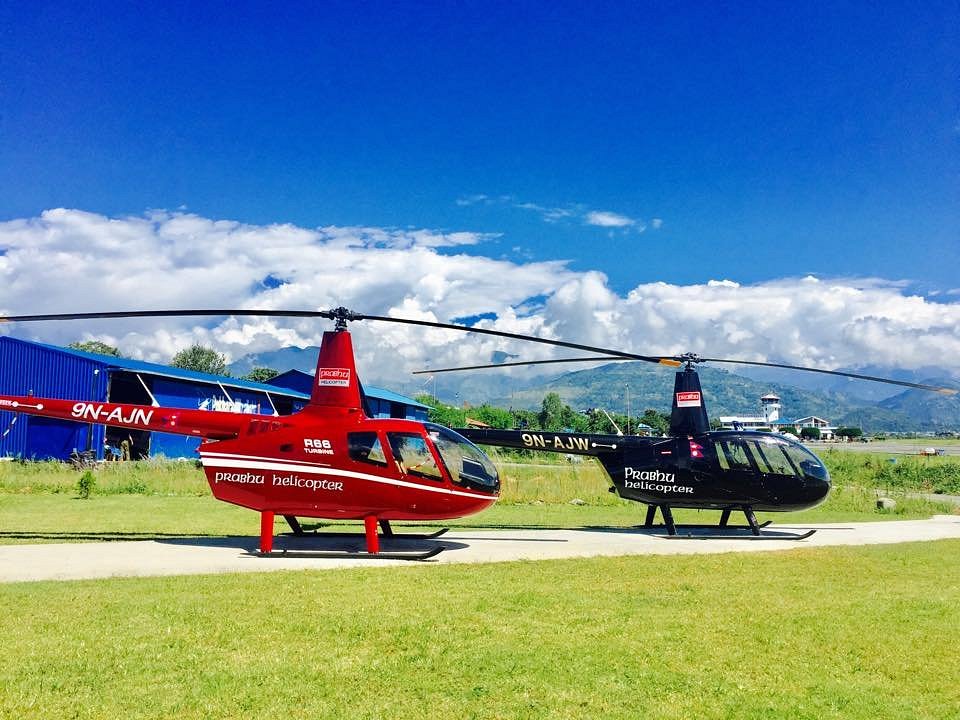
Eurocopter AS350 B3e: Single-engine, carries up to 5 passengers, ideal for mountain flights.
Airbus H125 (AS350 Ecureuil): Spacious cabin for 6 passengers, often used for rescues and scenic flights.
Bell 407: Modern avionics, can fly in rough weather, accommodates up to 6 passengers.
All flights carry portable oxygen and a basic first aid kit for minor injuries and symptoms of High Altitude Sickness (HAS / AMS).
Headache
Dizziness
Nausea or vomiting
Fatigue or weakness
Shortness of breath
Rapid heartbeat
Sleep difficulty
Loss of appetite
Hydrate well: Drink plenty of water before and during the flight.
Avoid alcohol and caffeine: These can worsen dehydration.
Eat light: Heavy meals may cause discomfort.
Dress in layers: Wear warm and breathable clothing suitable for high-altitude conditions.
Wear proper footwear: Insulated boots or hiking shoes recommended.
Sun protection: Use sunscreen, sunglasses, and hats or beanies to protect from UV exposure and snow glare.
Experience the majestic Himalayas like never before with NepalChopper’s Everest Base Camp Helicopter Tour. Enjoy a luxurious and time-efficient journey to the heart of the world’s highest peaks while learning about the essential role of oxygen and high-altitude safety measures. Whether you are a first-time visitor or an experienced traveler, our detailed guide ensures your flight is safe, comfortable, and unforgettable.
NepalChopper provides travelers with complete information regarding the Everest helicopter tour, including safety precautions, oxygen usage, and the scenic flight itinerary. Our goal is to make your holidays in Nepal enjoyable, exciting, and full of mesmerizing Himalayan experiences.
Yes. All NepalChopper pilots are highly trained and familiar with the unique challenges of flying above 5,000 meters (16,404 ft). Many are native Nepalis with decades of experience in the Everest region. Pilots are trained in first aid and Acute Mountain Sickness (AMS) management, ensuring passenger safety at high altitudes.
Absolutely. All Everest helicopter flights carry supplementary oxygen for passengers. In case of discomfort or high-altitude sickness, oxygen can be administered immediately to ensure safety and comfort.
No. Airplanes are pressurized because they fly at altitudes above 6,000 meters, but helicopters generally operate between 3,000–5,500 meters. The natural atmosphere at these altitudes is sufficient for short flights, and pilots can descend if any passenger experiences breathing difficulties.
Passengers may experience mild headache, shortness of breath, or fatigue due to high altitude. Supplementary oxygen is available onboard, and the pilot can quickly descend to lower altitudes, such as Lukla (2,800 m / 9,187 ft), if necessary. Emergency transport to Kathmandu hospitals is also possible if conditions persist.
Helicopters operate at lower altitudes compared to commercial airplanes. They are built for high-altitude maneuvering and maintain optimal atmospheric conditions naturally, which is safe for short-duration flights.
The aerial distance from Kathmandu to Everest Base Camp is approximately 170 km (106 miles). By helicopter, this journey is completed in just 4–5 hours, including stops at scenic points like Lukla, Kala Patthar, and Everest View Hotel.
The helicopter lands at the Kalapathar viewpoint, about 5,250 m (17,225 ft), offering spectacular panoramic views of Mount Everest, Lhotse, Nuptse, Lingtren, and Pumori. This is the safest location for landing and provides the best photographic opportunities.
The risk is minimal because flights are short and stops at high-altitude viewpoints are brief (less than an hour). In case of mild symptoms like headache, supplementary oxygen is immediately provided, and the helicopter descends to safer altitudes.
Landing at EBC is unsafe due to glacial terrain, rocks, ice, and moraine movement. The site is unstable and ecologically fragile. Kalapathar provides a safe, unobstructed landing with stunning views of Everest and surrounding peaks.
Yes. After visiting Kalapathar, the helicopter lands at the Everest View Hotel (3,880 m), the world’s highest hotel, for breakfast or tea. Passengers can enjoy a buffet meal while soaking in the incredible views of Everest and Ama Dablam. Packed meals can also be arranged with prior notice.
NepalChopper uses reliable high-altitude helicopters, including:
All flights carry portable oxygen and a basic first aid kit for minor injuries and symptoms of High Altitude Sickness (HAS / AMS).
With these measures, the NepalChopper Everest Base Camp Helicopter Tour ensures a safe, comfortable, and unforgettable experience, combining scenic views, luxury, and proper high-altitude precautions for all travelers.
With these measures, the NepalChopper Everest Base Camp Helicopter Tour ensures a safe, comfortable, and unforgettable experience, combining scenic views, luxury, and proper high-altitude precautions for all travelers.
At NepalChopper, we understand that mountain weather and other factors can affect flight schedules. If your Everest Base Camp helicopter tour is delayed due to weather, technical issues, or government restrictions, you can postpone the trip to a date that suits you.
In case of personal emergencies, you can also request to postpone or cancel your tour. We will reschedule your helicopter flight for a later date, or offer a full refund if cancellation is required. Please review the detailed cancellation and postponement policies below for full transparency.
Flying in the Everest region requires careful attention to safety. Here are some essential safety measures to follow during your tour:
Follow all instructions from the helicopter crew. They are trained for high-altitude flights and will ensure your safety.
Avoid moving excessively inside the helicopter. Sudden movements can affect balance, especially at high altitudes, so remain seated with your seatbelt fastened.
Although the tour does not require trekking clothing, dress in layers and wear a warm jacket, gloves, sunglasses, and sturdy shoes. Weather at high altitudes can be cold even during spring or autumn.
The helicopter rises from Kathmandu (1,400 m) to Kala Patthar (5,545 m). Altitude sickness is possible, so stay hydrated, avoid alcohol, and eat light meals before the tour. Diamox can be taken if recommended by your physician.
Drink at least 3–4 liters of water during the day. Avoid alcohol and smoking to reduce the risk of altitude-related discomfort.
Passengers must wear seatbelts at all times. Familiarize yourself with emergency exits and safety protocols provided by the crew.
Maintain proper communication with crew members during the flight and after landing at locations such as Hotel Everest View.
NepalChopper uses B3 twin-engine helicopters for Everest flights. These helicopters are powerful and reliable for high-altitude operations. Each helicopter has seating for up to five passengers and a maximum weight limit of 2,250 kg, making them ideal for short, scenic flights over Everest.
The Everest Base Camp helicopter tour takes about 4 to 5 hours from Kathmandu, covering multiple scenic points. Here’s a breakdown of distances and approximate flying times:
This schedule allows passengers to enjoy stunning aerial views of Everest, Lhotse, Nuptse, and the surrounding valleys while making short stops at key scenic locations.
Everest Base Camp is at ~5,364 meters (17,598 ft) on the south side.
The air is extremely thin, reducing lift for helicopters.
Most helicopters can’t safely hover or land at this altitude for extended periods, especially with passengers.
EBC is located on glacial moraine and rocky surfaces.
There is no flat, stable area wide enough for a safe helicopter landing.
Winds and turbulence are strong and unpredictable.
Helicopter operations are strictly regulated in the Everest region.
Landing in EBC carries high risk of accidents due to unpredictable weather, snow, and glacier crevasses.
Pilots usually prefer designated landing spots like Everest View Hotel or Gorak Shep, where terrain is safer.
Helicopter tours often focus on overflights of Everest, Lhotse, and Nuptse to give passengers a view without risking a dangerous landing.
Landing at safer high points like Kalapathar allows passengers to get close-up views and photography without extreme risk.
| Feature | Everest Base Camp (EBC) | Kalapathar |
|---|---|---|
| Altitude | ~5,364 m (17,598 ft) | ~5,545 m (18,192 ft) |
| Purpose | Trekking base for climbers; start point for Everest summit expeditions | Scenic viewpoint for panoramic Everest and surrounding peaks |
| Helicopter Landing | Not possible; terrain and air thin | Possible; relatively safe flat area for hover/landing for photos |
| Scenery | Views of surrounding glaciers and base of Everest | Best unobstructed panoramic view of Everest, Lhotse, Nuptse, and Khumbu Glacier |
| Accessibility | Trek only; 8–12 days from Lukla | Trek from Gorak Shep (~2–3 hours); shorter for heli drop-offs |
| Crowd Level | Busy in peak season; trekkers stay in teahouses | Less crowded; mostly day visitors or trekkers returning from EBC |
| Experience | High-altitude trekking, climber’s base, glacier view | Iconic Everest photography, sunrise/sunset viewpoint, helicopter tours can land |
The Private Mount Everest Helicopter Tour is the most exclusive and time-efficient way to witness the world’s highest mountain without trekking. This premium experience is designed for travelers who demand privacy, comfort, safety, and flexibility. With a private charter, the entire helicopter is reserved only for you and your group—no seat sharing, no rushed schedules, and full customization options. You enjoy personalized service from hotel pickup in Kathmandu to your Himalayan return, making this the ultimate luxury Everest experience for families, couples, photographers, business travelers, and VIP guests.
The Everest Base Camp Helicopter Tour from Kathmandu allows you to reach the legendary Everest region in just a few hours. The flight takes you over lush hills, deep river valleys, Sherpa villages, glaciers, and the dramatic Khumbu Icefall before flying directly above Everest Base Camp. This all-in-one scenic helicopter journey is perfect for travelers who want to experience Everest but cannot commit to a long trek. It is also the most popular choice for senior travelers, luxury tourists, and time-limited visitors.
The Everest Heli Tour Cost for 2026 depends on factors such as group size, total passenger weight, landing permissions, and seasonal demand. On average, private charter prices range from USD 4,800 to USD 6,800 per helicopter, accommodating up to five passengers. Shared helicopter options may cost USD 1,200 to USD 1,500 per person. Prices generally include:
An Everest Helicopter Charter gives you full control over your Himalayan flight experience. Unlike shared flights, private charters offer:
This option is ideal for luxury travelers, honeymooners, documentary filmmakers, and emergency air access to the Everest region. It is also widely used for Lukla transfer, medical evacuation, and expedition logistics.
The Kala Patthar Helicopter Landing is the most thrilling moment of the tour. At 5,545 meters, Kala Patthar is the highest legal landing site for tourist helicopters and offers the best ground-level view of Mount Everest. Weather and weight conditions permitting, passengers can step out briefly to:
The Luxury Everest Helicopter Tour blends high-altitude adventure with five-star Himalayan comfort. This premium experience includes:
This tour is extremely popular among honeymoon couples, celebrities, high-end travelers, and senior luxury tourists seeking a once-in-a-lifetime Himalayan moment with maximum comfort.
The Mount Everest Fly Over Tour offers the most dramatic aerial perspective of the Himalayan giants. During the flight, you will witness:
This option is ideal for travelers who may not be physically fit for landing at high altitude but still want to see Everest up close from the sky.
The Everest Base Camp Helicopter Price varies depending on tour type:
Prices may fluctuate based on fuel cost, weather windows, aviation taxes, and peak trekking seasons.
The classic Everest Helicopter Tour includes three strategically essential landing points: Lukla, Everest View Hotel (Syangboche), and Kala Patthar. These landings are not only designed for sightseeing luxury but are also critical for aviation safety, altitude adjustment, and operational success.
Each landing plays a unique and irreplaceable role in making the Everest helicopter experience safe, legal, and unforgettable.
Lukla is the primary entry point to the Everest region and home to the legendary Tenzing-Hillary Airport. It is the busiest aviation hub in the Khumbu region and the cornerstone of all trekking, climbing, and helicopter operations.
✔ Fuel & Weight Balance Control
Helicopters cannot safely fly from Kathmandu directly to the Everest region at full fuel with passengers due to:
High altitude air density
Weight limitations
Reduced engine performance
Lukla serves as the mandatory fuel adjustment and load-balancing station for safe upper-altitude flying.
✔ Critical Weather Assessment Point
Mountain weather changes rapidly. At Lukla, pilots:
Recheck cloud movement
Assess valley wind conditions
Confirm visibility toward the upper Khumbu region
Only after this confirmation is the flight allowed to continue.
✔ Passenger Comfort & Safety Break
Guests:
Use restrooms
Stretch and hydrate
Adjust warm clothing and oxygen
This stop prepares the body for rapid altitude gain.
✔ Emergency & Backup Landing Base
If weather deteriorates, Lukla becomes the primary safe return base for the aircraft.
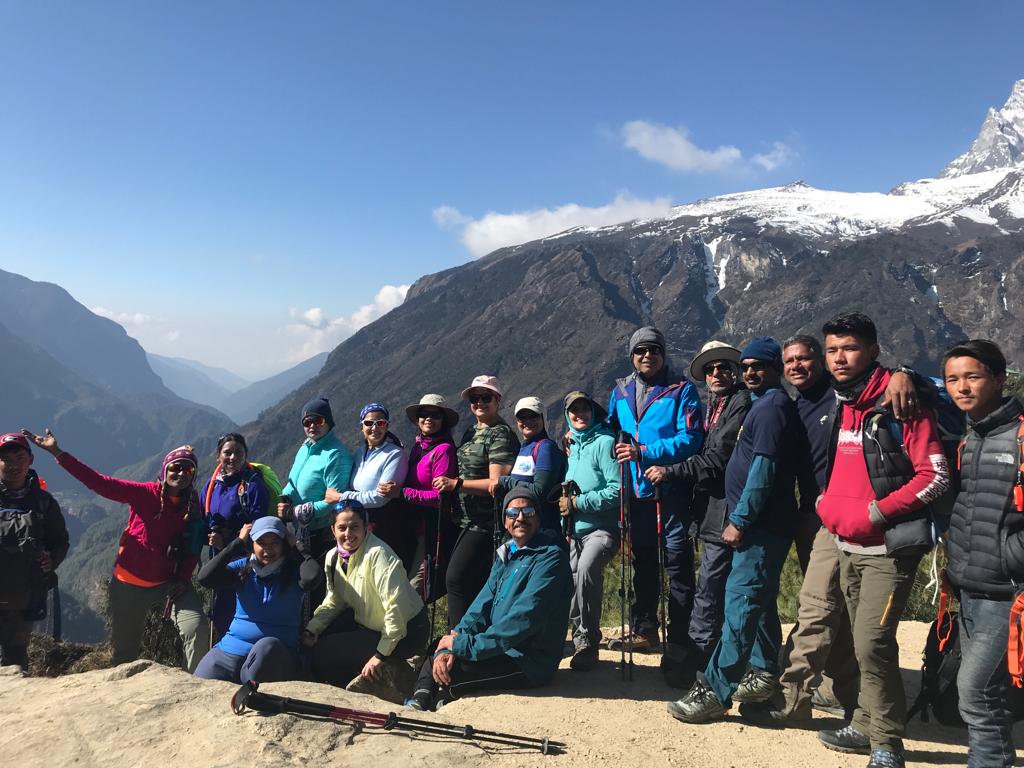
Everest View Hotel is one of the highest-altitude luxury hotels in the world. It offers a direct panoramic view of Mount Everest, Lhotse, Ama Dablam, and Thamserku from its main terrace.
This is the comfort and acclimatization center of the helicopter tour.
✔ Controlled Acclimatization Point
At nearly 4,000 meters, this is the first major altitude exposure for most helicopter passengers. The hotel provides:
✔ Iconic Everest View Breakfast Stop
Guests enjoy:
✔ Weather Decision Control Center
Pilots observe:
✔ Passenger Health Reassessment
Crew checks:
Kala Patthar is the highest authorized helicopter landing zone in the Everest region and the closest possible viewpoint to Mount Everest accessible by air.
From here, guests witness:
✔ Closest Legal Touchdown to Everest
Helicopters are not allowed to land at Everest Base Camp during most seasons. Kala Patthar provides the only safe and legal alternative for physical touchdown near Everest.
✔ Best Everest Summit Visibility
From Everest Base Camp, the summit of Everest is partially hidden.
From Kala Patthar, guests see:
The complete summit pyramid
The most iconic Everest viewpoint in the world
✔ Once-in-a-Lifetime Extreme Altitude Experience
Landing at over 5,500 meters without trekking is:
✔ Strict Time-Control for Safety
Due to very low oxygen levels:
| Landing Point | Altitude | Main Purpose | Why It Is Mandatory |
|---|---|---|---|
| Lukla | 2,860 m | Fuel, safety, weather check | Required for aircraft weight control, emergency base |
| Everest View Hotel | 3,880 m | Breakfast, acclimatization | Passenger health check, weather observation |
| Kala Patthar | 5,545 m | Everest summit viewing | Closest legal and safe landing point to Everest |
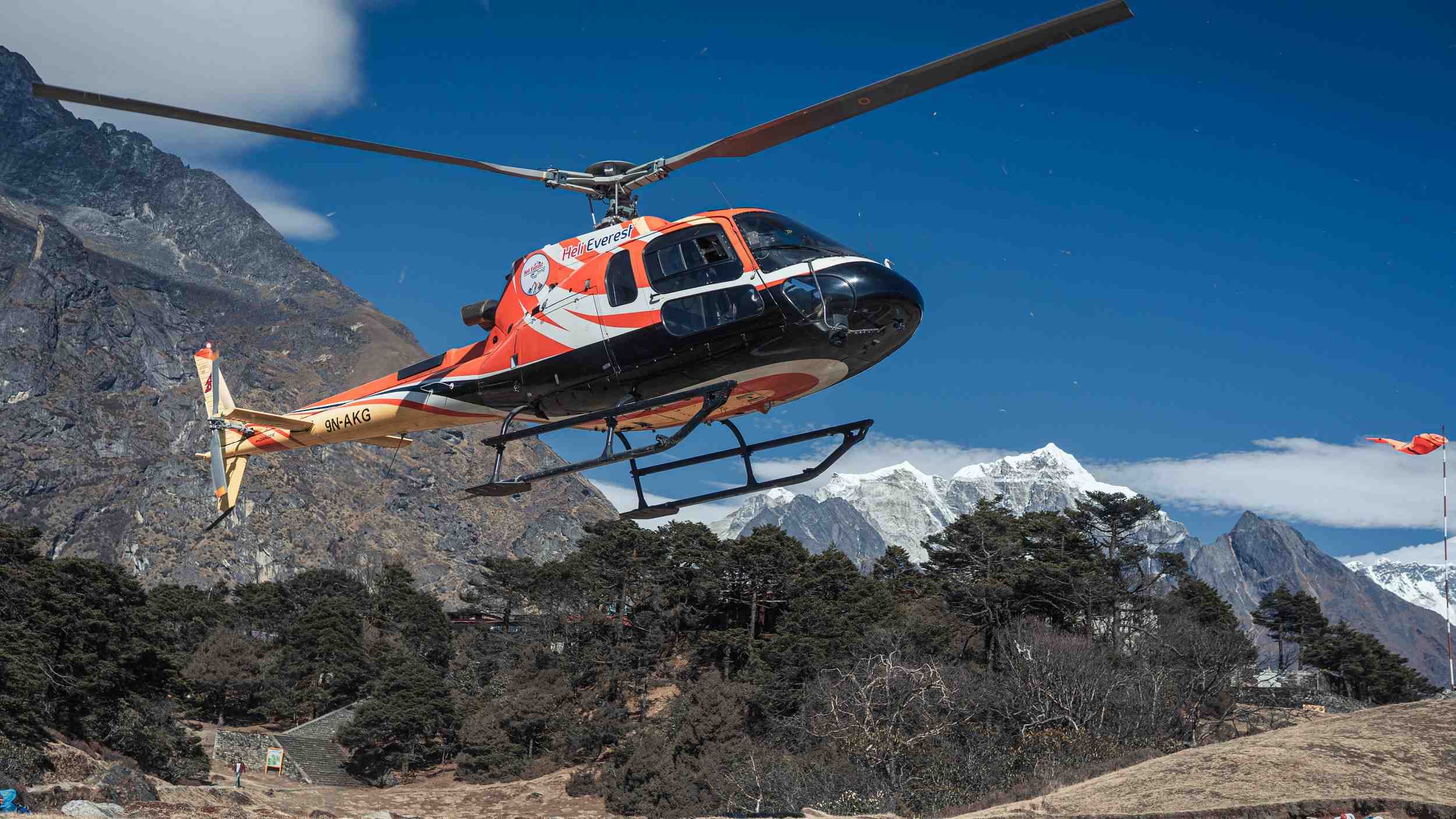
Perched on Syangboche Ridge above Namche Bazaar — panoramic views of Mount Everest, Ama Dablam and the Khumbu range.
Short description: Hotel Everest View, inside Sagarmatha (Everest) National Park, offers luxury-style lodging at high altitude with Sherpa hospitality and unforgettable mountain panoramas.
Hotel Everest View is located near Namche Bazaar on Syangboche Ridge and offers rare 360° panoramas of the Everest massif. Opened in the early 1970s, the property is known for its high-altitude blend of comfort, Sherpa hospitality and direct mountain views from its main terrace and many rooms.
Altitude: Approx. 3,880–3,962 m (13,000 ft)
Location: Syangboche Ridge, above Namche Bazaar — inside Sagarmatha National Park.
Highlights: Sunrise over Everest, panoramic terrace, Sherpa cuisine, cultural links to Khumjung & Khunde.
 Accommodation & Facilities
Rooms are designed to maximize views — many have large windows or terraces facing Everest and neighboring peaks. The hotel offers dining, oxygen outlets in rooms, pulse oximeters on request, and basic medical coordination/support for altitude issues. Luxury is balanced with local character and mountain practicality.
Typical services
Restaurant & terrace dining (sunrise breakfasts)
Oxygen outlets and pulse oximeters for guest safety
Assistance with local guides, day hikes and logistics
Photo terrace, small library and cultural displays
The usual approach is trekking from Lukla to Namche Bazaar, followed by a short uphill walk to Hotel Everest View. From Namche the walk is roughly 2–3 hours depending on pace and detours. Helicopter transfers to the Syangboche helipad are also possible (seasonal / weather dependent). Always include acclimatization days at Namche.
Typical day trips & hikes nearby
Acclimatization notes: Rest at Namche (24 hrs recommended). If flown directly to high altitude, limit activity for the first hours and monitor oxygen saturation. Hotels often loan oxygen and pulse oximeters.
Quick facts
- Nearest town: Namche Bazaar (approx. 1.5 km — steep)
- Altitude: ~3,880–3,962 m
- Best season: March–May (spring) & Sept–Nov (autumn)
Guests can join short guided walks to Khumjung and Khunde, enjoy cultural introductions at the hotel, birdwatch (Himalayan monal), and attend local festivals like Mani Rimdu when available. The hotel partners with local cooperatives to sell Sherpa handicrafts and supports community projects.
Wildlife & environment: The hotel sits within a fragile ecosystem. Visitors should respect wildlife hours, avoid noisy helicopter activity during breeding seasons, and follow park rules to protect species such as the Himalayan monal.
At ~3,900 m the effective oxygen level is much lower than at sea level. Common altitude symptoms: headache, nausea, disturbed sleep. Practical measures: hydrate, avoid heavy activity for the first 24 hours, consider medical advice about acetazolamide, and use hotel-provided oxygen if SpO₂ falls below safe thresholds.
Hotel safety systems
The hotel employs Sherpa staff from Khumjung and Khunde, funds local medical care, supports women’s cooperatives that sell handwoven blankets, and invests in energy projects to reduce fuel dependence. These efforts aim to preserve local language, culture and livelihoods while reducing environmental impact.
Community & environment highlights
A The complete Private Everest Helicopter Tour from Kathmandu takes approximately 4 to 5 hours from hotel pickup to hotel drop-off, making it the fastest and most exclusive way to experience Mount Everest in a single day without trekking. The journey begins early in the morning with a private hotel transfer to the domestic terminal of Kathmandu Airport, followed by a scenic Himalayan flight toward the Everest region. The total flying time is around 2 to 2.5 hours round-trip, with additional time allocated for refueling, weather checks, and short high-altitude stops. During the tour, you will enjoy: ✅ Private hotel pickup & airport handling in Kathmandu ✅ Scenic helicopter flight from Kathmandu to the Everest region ✅ Thrilling fly-over of Everest Base Camp and the Khumbu Icefall ✅ Kala Patthar landing (5,545m) for close-up views of Mount Everest (subject to weather & weight conditions) ✅ Luxury breakfast at Everest View Hotel (3,880m) with panoramic Himalayan vistas ✅ Comfortable return flight to Kathmandu in the early afternoon Despite visiting extreme high-altitude locations, exposure time is kept short for safety, and the helicopter descends immediately after each stop. This carefully designed schedule allows you to witness the world’s highest mountain, capture iconic photographs, enjoy a high-altitude luxury breakfast, and still return to your hotel in Kathmandu the very same day—making it the ultimate Everest experience for luxury travelers, families, senior guests, and time-limited adventurers.
A Direct landing at Everest Base Camp (EBC) is restricted by aviation authorities, especially during the peak climbing seasons (April–May). However, your helicopter will fly directly over Everest Base Camp and the Khumbu Icefall, giving you incredible aerial views. Weather permitting, landing is offered at Kala Patthar (5,545m), which is the best viewpoint to see Mount Everest up close and safely on the ground.
A The complete tour duration is approximately 4 to 5 hours, including: Hotel pickup & airport transfer Kathmandu to Everest region flight Fly-over of Everest Base Camp Kala Patthar landing (if permitted) Breakfast at Everest View Hotel Return flight to Kathmandu This makes it the fastest way to experience Mount Everest in one single day.
A No, trekking permits are NOT required for the Private Everest Helicopter Tour because no trekking activities are involved at any stage of the journey. This tour is a fully aerial experience designed for travelers who want to witness Mount Everest, Everest Base Camp, and the Himalayan glaciers in the shortest time without physically hiking. However, for legal aviation operations and regional access, all mandatory government fees are already included in your helicopter tour package, such as: ✅ Sagarmatha National Park Permit ✅ Local Rural Municipality Entry Fee (Khumbu Region) ✅ Helicopter Landing Charges (Kala Patthar / Everest View Area) ✅ Civil Aviation & Airport Fees These permits and fees are handled entirely by Nepal Chopper, so you do not need to arrange or apply for anything separately. This makes the Everest Helicopter Tour a hassle-free, time-efficient, and luxury alternative to long trekking routes. ✔ No paperwork ✔ No long permit process ✔ No trekking stress ✔ 100% aerial access with legal clearance This is one of the biggest advantages of choosing a Luxury Everest Helicopter Tour from Kathmandu.
A The risk of altitude sickness on the Private Everest Helicopter Tour from Kathmandu is very low for most travelers because your exposure to extreme altitude is brief, controlled, and carefully monitored by professional pilots and crew. Here is why altitude sickness is generally not a major concern on this tour: ✅ Very Short High-Altitude Exposure: You only spend a limited amount of time above 4,000–5,000 meters, which significantly reduces the chance of Acute Mountain Sickness (AMS). ✅ No Overnight Stay at Altitude: Most altitude-related complications develop after prolonged exposure or sleeping at high elevation. Since this tour is a same-day return flight to Kathmandu, your body does not have time to develop serious symptoms. ✅ Emergency Oxygen Always Available: Each helicopter is fully equipped with supplemental medical oxygen for passenger comfort and immediate use if needed. ✅ Rapid Descent Capability: If anyone experiences headache, dizziness, nausea, or discomfort, the pilot can immediately descend to a lower altitude, which quickly relieves symptoms. ✅ Experienced High-Altitude Pilots: Pilots are specially trained for Himalayan flying and recognize early signs of altitude-related discomfort. ⚠️ Who Should Take Extra Precautions? While the tour is considered safe for most healthy individuals, including senior citizens, the following travelers should consult a doctor before booking: People with serious heart conditions Chronic lung or respiratory issues History of severe altitude sickness Recent major surgeries High-risk pregnancy ✅ Final Safety Summary ✔ Safe for families & seniors ✔ No prior trekking experience needed ✔ Oxygen support available throughout ✔ Quick escape to lower altitude anytime ✔ Medically safer than multi-day trekking The Luxury Everest Helicopter Tour is one of the safest ways to experience Mount Everest without the risk exposure of long trekking journeys.
A A private helicopter used for Everest Base Camp Helicopter Tours from Kathmandu can typically accommodate: ✅ Up to 5 passengers maximum (depending on total body weight and altitude conditions) ✅ Combined passenger weight limit ranges between 400–450 kg at high altitude, as per aircraft performance and aviation safety regulations At lower altitudes such as Kathmandu and Lukla, the helicopter can carry higher weight safely. However, as the helicopter ascends into the thin air of the Everest region, strict weight limitations are enforced to ensure: Safe takeoff and landing Stable maneuvering over glaciers Proper fuel balance Emergency performance capability ? Why is the passenger limit strictly controlled? High-altitude helicopter operations demand maximum safety precision due to: Reduced air density above 4,000–5,000 meters Steep mountain terrain and narrow landing zones Glacier wind conditions Emergency descent requirements For this reason, the pilot and airline operations team calculate: ✅ Passenger body weight ✅ Baggage weight ✅ Fuel requirement before approving the final flight load. ✅ What if your group has more than 5 people? If your group exceeds the safe weight or seat limit: ✅ We operate two or more helicopters ✅ Or run multiple shuttle rotations ✅ While maintaining exact safety standards ?️ Final Summary ✔ Maximum 5 passengers per helicopter ✔ 400–450 kg total weight limit at high altitude ✔ Strict CAAN aviation safety compliance ✔ Multiple helicopters available for larger groups ✔ Passenger comfort + flight safety guaranteed This controlled capacity is what makes the Luxury Private Everest Helicopter Tour both safe and exclusive.
A We use only high-altitude certified helicopters, such as: Airbus AS350 B3e Bell 407 These helicopters are specially designed for Himalayan rescue and high-altitude flights, operated by experienced mountain pilots.
A The best seasons are: ✅ Spring (March–May) – Clear skies, best visibility ✅ Autumn (September–November) – Stable weather, sharp mountain views Winter flights are possible in good weather. Monsoon season (June–August) is not recommended due to clouds and rain.
A It is highly recommended to wear: Warm down jacket or insulated jacket Thermal inner layers Sunglasses & sunscreen Comfortable shoes Even though you are flying, temperatures at Kala Patthar can be below freezing.
A Yes, absolutely. This tour is: Suitable for children Ideal for senior citizens Perfect for families, couples & VIP travelers Because there is no walking or trekking involved, it is one of the most comfortable ways to see Mount Everest.
A Mountain flights are fully weather dependent. If weather conditions are unsafe: Your tour will be rescheduled to the next suitable day Or you may choose a full refund as per company policy Safety always comes first in Himalayan aviation.
A Yes! Since this is a private charter, you can customize: Departure time Breakfast hotel option Photography stops (weather permitting) Special occasions (birthday, anniversary, proposal)
 Best price guaranteed
No booking fees
Safe Trip Plan
Best price guaranteed
No booking fees
Safe Trip Plan
Response Time 0-2 Hours , Response Rate 100%
© 2011 - 2026 All rights reserved. Nepal Chopper Pvt. Ltd.







JohnAustriaOn 20/11/2025
Awesome
Perfect Tour Agency