
By Nepal Chopper 10 Nov 2026
Everest Helicopter Tour: Why It’s So Popular And Where It Really Lands
Most Everest helicopter tours do not land inside Everest Base Camp (5,364 m). Base Camp is a working expedition village of tents on the moving Khumbu Glacier, and its few helipads are kept for rescue flights and climbing logistics. It is also a poor place to see Everest itself: the camp sits so close under the mountain that the summit is hidden behind Everest's own shoulder and the wall of Nuptse. So sightseeing helicopters fly over the camp and the Khumbu Icefall, giving you the full aerial view of the tents, the glacier and the climbing route, without touching down.
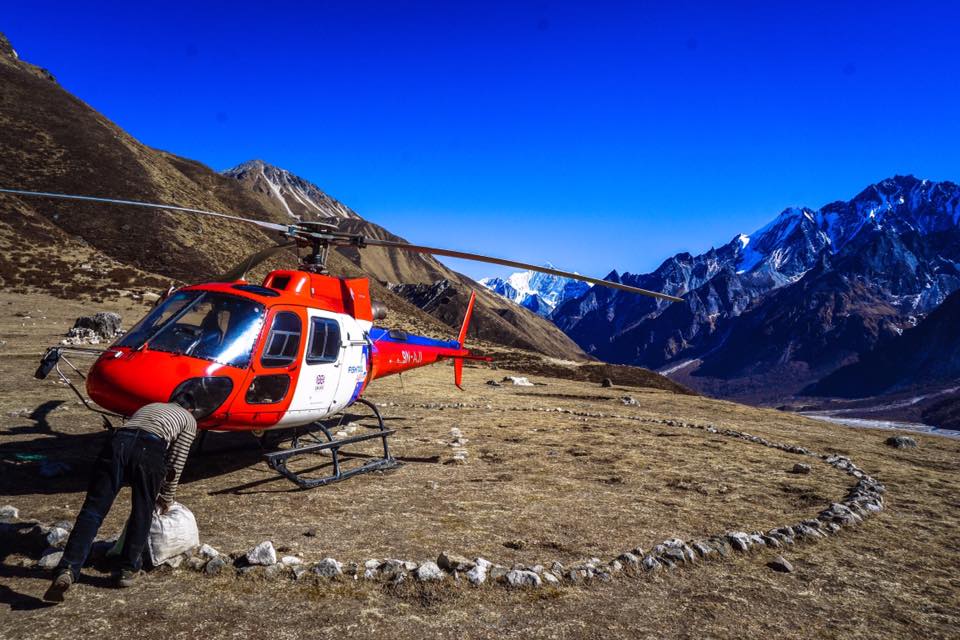
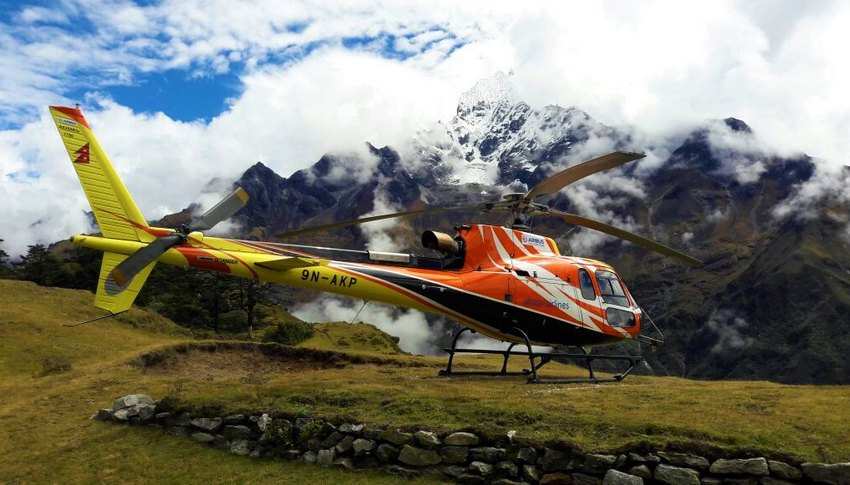
The real landing, when the rules and the weather allow it, is at Kala Patthar (about 5,545 m), a dark rocky ridge above Gorakshep that faces Everest head-on. This is the classic viewpoint trekkers climb at the end of a two-week trek, and from here you see the whole south-west face of Everest along with Lhotse, Nuptse, Pumori and Changtse. Because the air holds only about half the oxygen of sea level and the helicopter can lift very little at this height, the stop is short, usually 5 to 10 minutes with the engine running, and often only two passengers land at a time. On private charters the Kala Patthar landing is the main highlight; on shared tours it is an optional add-on, reached by a small shuttle from Pheriche, and it can be dropped on the day if the wind, cloud or weight limits make it unsafe.
On the way down, almost every tour stops at Hotel Everest View (3,880 m) at Syangboche, above Namche Bazaar. Breakfast is served on a terrace that looks straight at Everest and Ama Dablam, and the lower altitude gives everyone time to relax after the thin air above. The helicopter then refuels at Lukla if needed and flies back to Kathmandu, landing by late morning, about 4 to 5 hours after you left your hotel at dawn.
Why it's so popular
The tour delivers the view from the end of a 12–14 day trek in about 4–5 hours, with no fitness, acclimatisation or trekking experience needed.
- Time: the Everest Base Camp trek takes roughly two weeks round trip; the helicopter does the highlights in one morning and you are back in Kathmandu for lunch.
- No physical barrier: suitable for older travellers, families, people with limited mobility or anyone who cannot spend days walking at altitude.
- The best Everest view in Nepal: Kala Patthar faces the full south-west face of Everest, plus Lhotse, Nuptse, Pumori and Ama Dablam. You cannot see Everest's summit from Base Camp itself.
- The flight is the attraction: you fly up the Dudh Koshi valley over Lukla, Namche Bazaar, Tengboche monastery and the Khumbu Glacier and Icefall.
- Breakfast with a view: Hotel Everest View (3,880 m) is a famous high-altitude hotel with a terrace looking straight at Everest and Ama Dablam.
- Special occasions: proposals, honeymoons, anniversaries and birthdays are common reasons to book a private charter.
- Trek add-on: trekkers often fly back from Gorakshep or Kala Patthar instead of walking down for three days.
Does it land at Everest Base Camp?
No, not on a normal sightseeing tour. Helicopters do land at Base Camp, but for rescue and expedition logistics; tourist flights fly over it and land at Kala Patthar nearby.
Three reasons tours don't land inside Base Camp:
- It's a working expedition camp on the moving Khumbu Glacier; landing space is reserved for expeditions and rescues, and local rules limit helipads there to rescue use.
- You can't see Everest's summit from it. Base Camp sits so close under the mountain that the summit is hidden behind Everest's own shoulder and Nuptse.
- Thin air. At these heights a helicopter can lift very little, so every high landing is kept short and light.
|
Stop |
Altitude |
What happens |
On which tours |
|---|---|---|---|
|
Lukla (Tenzing–Hillary Airport) |
2,860 m |
Refuelling stop, 10–15 min |
Almost all |
|
Hotel Everest View, Syangboche |
3,880 m |
Breakfast facing Everest and Ama Dablam, ~30–45 min |
Almost all |
|
Pheriche |
4,371 m |
Shuttle point: guests are ferried up to Kala Patthar two at a time |
Shared tours with a Kala Patthar landing (2026) |
|
Kala Patthar |
5,545 m |
Short landing facing Everest, about 5–10 min, engine running |
Private charters; shared "landing" tours |
|
Everest Base Camp |
5,364 m |
Seen from the air (flyover) |
All — not a landing stop |
Kala Patthar's summit is often quoted as 5,644 m; the helicopter landing spot is usually given as about 5,545 m. Any operator that promises a guaranteed landing inside Base Camp on a sightseeing tour should be asked to show the permission for it.
Route and timeline
The whole tour takes about 4–5 hours, leaving Kathmandu at dawn and returning before midday. Times below are typical and shift with weather and air traffic.
- 05:30–06:00 — Hotel pickup and transfer to the domestic terminal at Tribhuvan Airport, Kathmandu (1,400 m).
- ~06:30 — Take off. About 45–50 minutes east over the hills, with the Langtang, Jugal and Rolwaling ranges on the left.
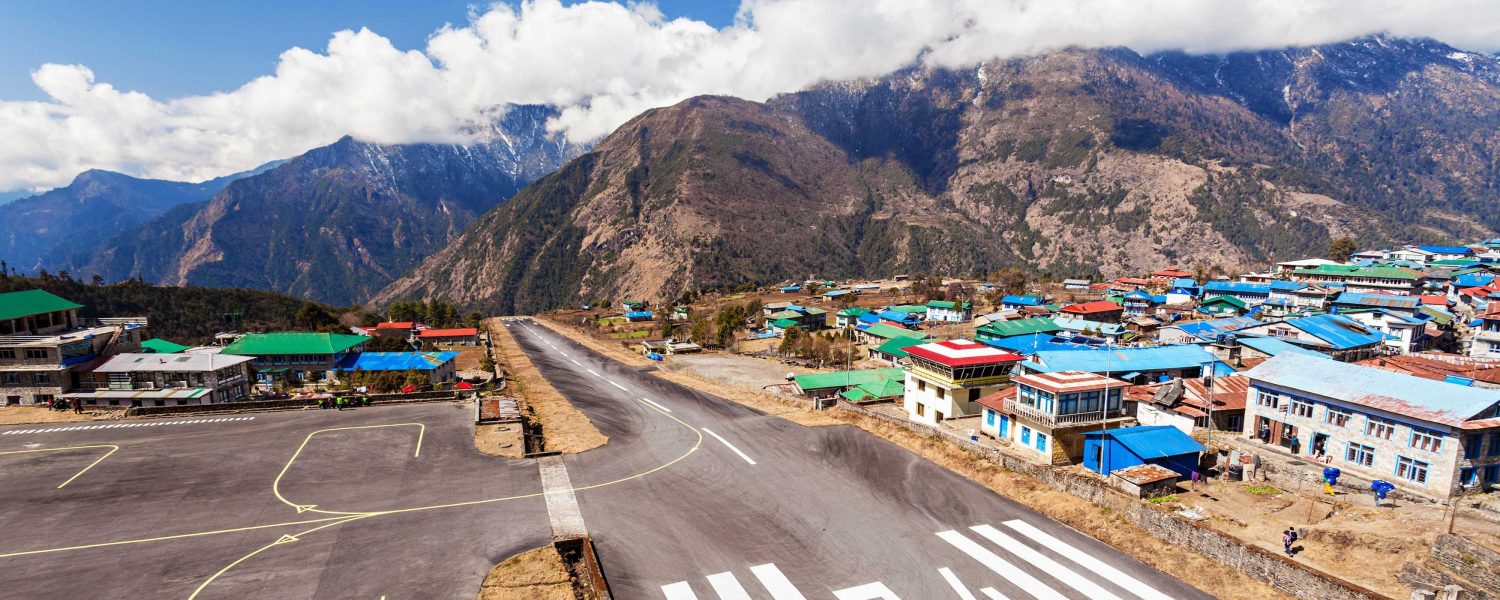
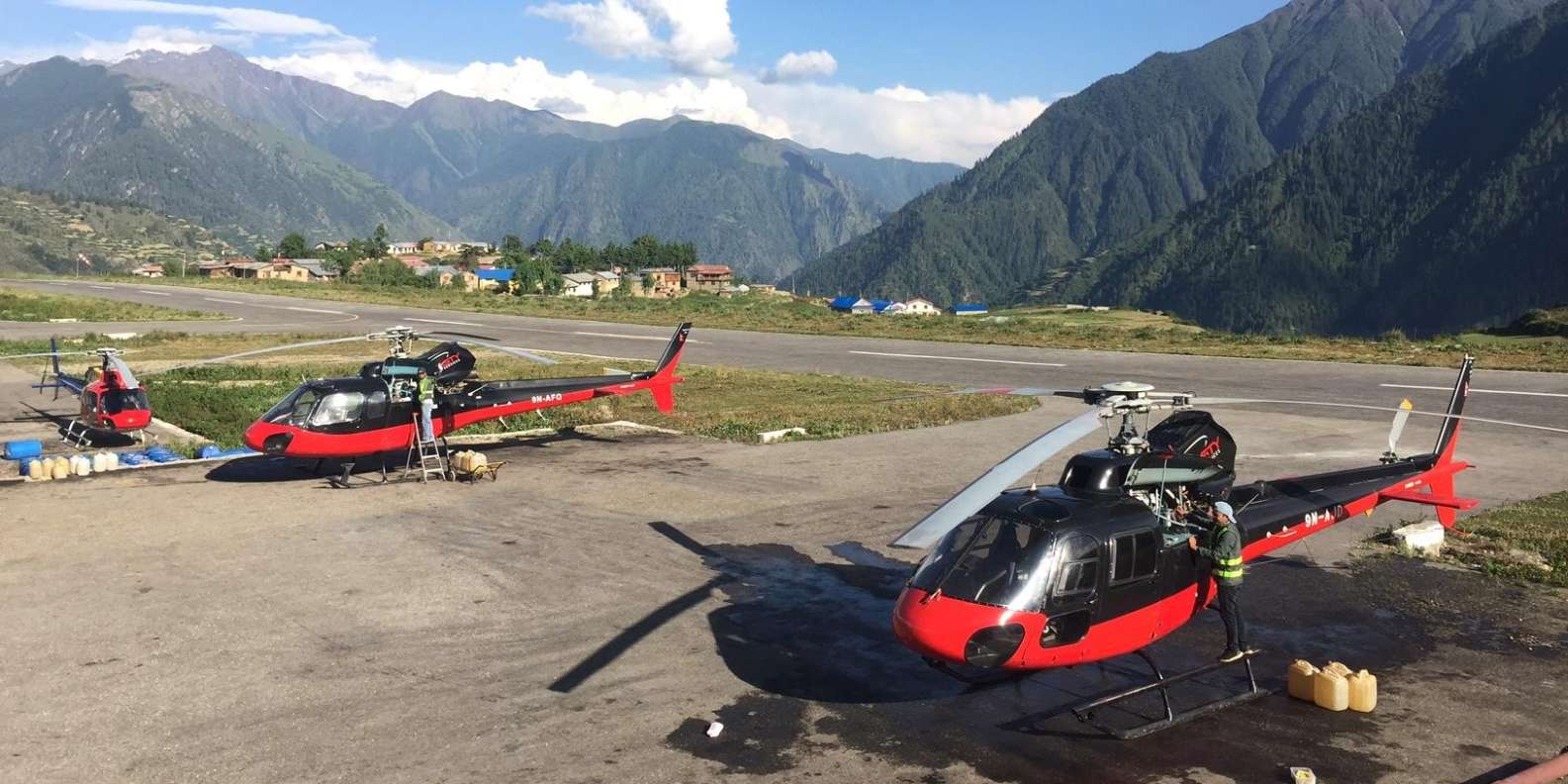
- ~07:20 — Lukla (2,860 m). Refuelling; on shared tours the group may be split into smaller loads here for the high section.
- ~07:40 — Up the Khumbu valley over Phakding, Namche Bazaar, Tengboche, Pangboche and Pheriche.
- ~08:00 — Everest Base Camp flyover and the Khumbu Icefall, then a short landing at Kala Patthar (5,545 m) if your tour includes it and conditions allow.
- ~08:30 — Breakfast at Hotel Everest View (3,880 m), Syangboche, with Everest, Lhotse and Ama Dablam in front of the terrace.
- ~09:30 — Fly back via Lukla (refuel if needed) to Kathmandu.
- ~10:30–11:00 — Land in Kathmandu and transfer back to the hotel.
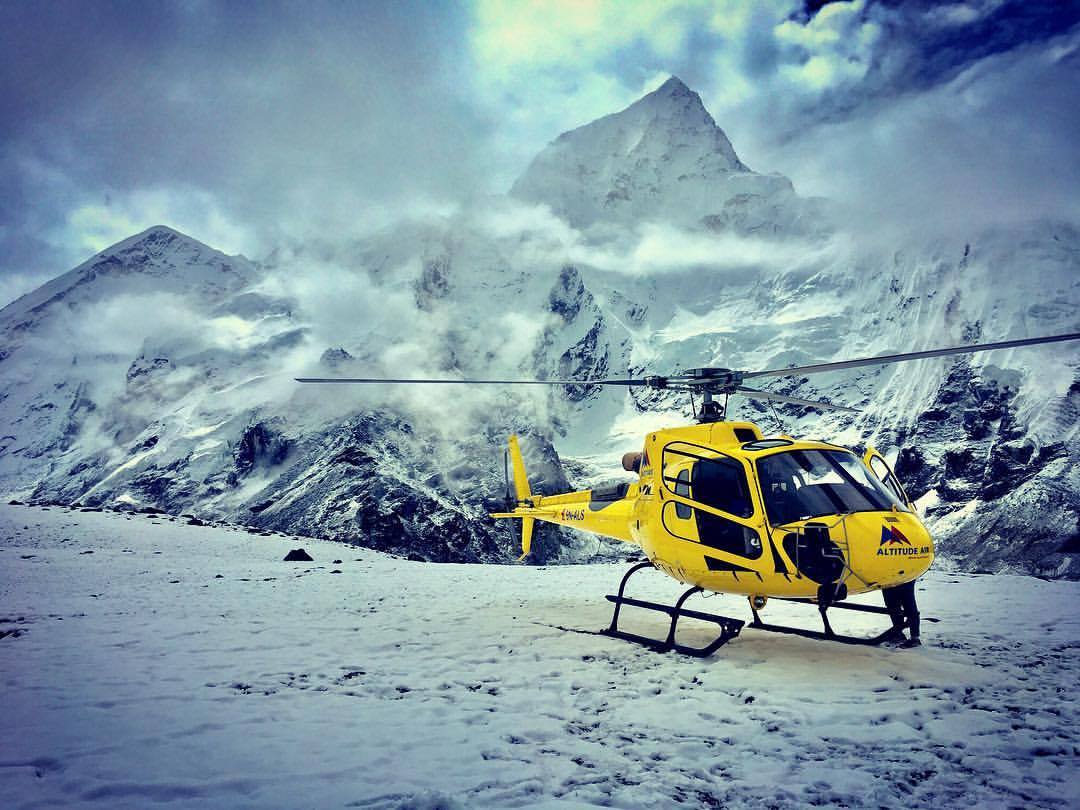
Most tours fly a light AS350 B3e (Airbus "Squirrel"), the same type used for high-altitude rescue. It seats up to 5–6 passengers at low altitude, but only about 2 passengers can land at Kala Patthar at once, which is why shared tours shuttle guests up in pairs.
Tour types and price
A shared seat with a breakfast stop is the budget option at about USD 1,300–1,500 per person; a Kala Patthar landing costs more on a shared seat (~USD 2,000–2,200) or comes with a private charter (~USD 4,900–6,000 for the whole helicopter).
|
Tour type |
Landings |
Typical 2026 price (USD) |
Best for |
|---|---|---|---|
|
Shared seat (group joining) |
Lukla, Hotel Everest View; Base Camp and Kala Patthar seen from the air |
1,300–1,500 per person |
Solo travellers, couples on a budget |
|
Shared seat + Kala Patthar landing |
Adds a short Kala Patthar landing via a 2-person shuttle from Pheriche |
~2,000–2,200 per person |
Solo travellers who want to stand facing Everest |
|
Private charter (1–5 people) |
Kala Patthar + Hotel Everest View, weather and weight permitting |
~4,900–6,000 per helicopter |
Families, groups of 3–5, proposals, flexible timing |
Usually included: helicopter flight, pilot, fuel, airport taxes, hotel transfers in Kathmandu. Check whether included: breakfast at Hotel Everest View (sometimes ~USD 40 extra), Sagarmatha National Park entry and the Khumbu Pasang Lhamu local fee, and any surcharge for the Kala Patthar shuttle.
Rules in 2027–2028
Tours are running in late 2026, and some shared tours again include a Kala Patthar landing, but no single public document approves every high landing, so each booking needs the operator to confirm the exact landing for that date.
What it means for guests: a shared seat always includes the Base Camp flyover and Hotel Everest View breakfast; a Kala Patthar landing is a separate, conditional option. Ask for a written note of the landing points and what happens if a landing is not permitted on the day.
Best time to fly
October–November gives the clearest skies; March–May is the second-best window. Tours run year-round, but monsoon flights are often delayed or cancelled.
|
Season |
Months |
Views |
Notes |
|---|---|---|---|
|
Autumn |
Oct–Nov |
Best: crisp, clear, stable |
Peak demand — book shared seats early |
|
Spring |
Mar–May |
Very good mornings, haze later |
Everest climbing season; rhododendrons in the lower valleys |
|
Winter |
Dec–Feb |
Often very clear |
Cold (−15 °C or lower at Kala Patthar); occasional snow delays |
|
Monsoon |
Jun–Sep |
Cloudy, frequent cancellations |
Cheapest; keep 1–2 spare days |
Always fly first thing in the morning: winds rise and clouds build over the Khumbu by late morning. Keep at least one buffer day before your international flight in case weather moves the tour.
Altitude, safety and who can go
You go from 1,400 m to 5,545 m in about an hour with no acclimatisation, so the high landing is deliberately kept to a few minutes; most healthy people feel only mild breathlessness or a light headache.
- At Kala Patthar: walk slowly, don't run or jump for photos, keep talking to your pilot or guide. The air holds roughly half the oxygen of sea level.
- Who can go: most ages, including children and older adults. People with heart or lung conditions, severe high blood pressure, or who are pregnant should ask their doctor first; operators may skip the high landing for them.
- Weight limits: total passenger and luggage weight decides how many can fly each leg. Expect to give everyone's weight when booking; heavier groups may need an extra shuttle.
- Weather decides: the pilot can cancel or shorten any landing for wind, cloud or load. That is a safety call, not a service failure.
- Insurance: a sightseeing flight is not a medical evacuation. Check that your travel insurance covers helicopter travel and altitude up to ~5,600 m.
- Choose a licensed operator using CAAN-approved helicopters and experienced mountain pilots; ask which company actually flies the aircraft.
What to wear and bring
Dress for −10 °C or colder at Kala Patthar even if Kathmandu is warm, and keep luggage to a small day bag.
- Warm layers: thermal base layer, fleece, down or insulated jacket
- Warm hat, gloves and a buff or scarf (the rotor wash is icy)
- Sunglasses with UV protection and sunscreen — snow glare is intense
- Comfortable shoes with good grip; boots are not needed
- Camera or phone, fully charged, with a spare battery (cold drains batteries fast); avoid loose items that could blow into the rotor
- Passport (needed at the domestic terminal) and some cash for extras
- Water and any personal medication; avoid alcohol the night before
Before you book: what to confirm
- Exact landing points: Kala Patthar landing, or flyover only?
- Shared seat or private charter, and the maximum number of passengers per leg
- What happens if the Kala Patthar landing isn't permitted or the weather closes in (alternate stop, partial refund, new date)
- Whether breakfast, park entry and local fees are in the price
- Which licensed helicopter company operates the flight
- Weight limits and whether your group needs a split or extra shuttle
- Cancellation and weather-delay policy in writing
- A buffer day before your international departure
Everest Helicopter Tour: Frequently Asked Questions
Can I stand at Everest Base Camp on a helicopter tour?
Not on a standard sightseeing tour. Everest Base Camp (5,364 m) is a working expedition camp on the moving Khumbu Glacier, and its helipads are reserved for rescue flights and climbing logistics. Sightseeing helicopters fly low over the camp and the Khumbu Icefall so you can see the tents, the glacier and the start of the climbing route from the air.
The landing is made at Kala Patthar (about 5,545 m) instead, which is the better place to be: from Base Camp the summit of Everest is hidden behind the mountain's own shoulder and Nuptse, while Kala Patthar faces Everest head-on. If standing at Base Camp itself is important to you, the best option is to trek in on the Everest Base Camp trek and fly back to Lukla or Kathmandu by helicopter from Gorakshep.
How long do I stay at Kala Patthar?
About 5 to 10 minutes, usually with the engine running. At 5,545 m the air holds roughly half the oxygen found at sea level, and you arrive there from Kathmandu (1,400 m) in about an hour with no time to acclimatise, so a short stop keeps everyone safe and comfortable.
The thin air also reduces how much a helicopter can lift, which is why only about two passengers land at a time and the pilot keeps the stop brief. It is plenty of time for photos and to take in the view of Everest, Lhotse, Nuptse, Pumori and Ama Dablam. Walk slowly, avoid running or jumping for pictures, and tell your pilot or guide straight away if you feel dizzy.
How long is the whole tour?
About 4 to 5 hours from hotel pickup to drop-off. A typical morning starts with pickup at 5:30 to 6:00 am and take-off from Kathmandu's domestic terminal around 6:30 am. The helicopter refuels at Lukla, flies up the Khumbu valley over Namche Bazaar and Tengboche, passes over Everest Base Camp, lands at Kala Patthar where included, and then stops for breakfast at Hotel Everest View (3,880 m).
You are usually back in Kathmandu between 10:30 and 11:00 am, leaving the rest of the day free. Weather or air traffic can shift these times, so we recommend keeping at least one spare day before your international flight.
Do I get a window seat?
On a shared tour, seats are assigned by the pilot according to each passenger's weight so the helicopter stays balanced, which matters a great deal at high altitude. Most operators use helicopters with large windows on all sides, and many guarantee every passenger a window view, but it is worth confirming when you book.
If photography or a specific seat matters to you, a private charter is the simplest choice: only your own group is on board, and you can agree the seating and photo stops with the pilot in advance.
Can children and seniors go?
Yes, in general. No walking or fitness is required, which makes the helicopter tour one of the few ways older travellers, young children and people with limited mobility can see Everest up close. Most passengers feel nothing more than mild breathlessness or a light headache during the short high stop.
Anyone with heart or lung conditions, severe high blood pressure, or who is pregnant should check with their doctor before booking. If the pilot or a doctor has any concern, that passenger can skip the Kala Patthar landing and wait at a lower stop such as Hotel Everest View, while the rest of the group still enjoys the full flight.
What if the weather is bad?
Safety comes first, so the flight only goes when the pilot judges the route and landing sites to be clear. If cloud, wind or rain closes in, the tour is postponed to the next suitable morning. Early mornings in October, November and March to May have the most reliable weather, while the June to September monsoon brings frequent delays.
Sometimes the tour can still fly but a high landing is dropped on the day for wind or weight reasons. Before you book, ask in writing what happens in each case: whether you get a new date, an alternative stop or a partial refund, and how the cancellation policy works.
Is it the same as the Everest mountain flight?
No, they are two different experiences. The Everest mountain flight is a roughly one-hour airplane flight from Kathmandu along the Himalayan range. It does not land anywhere, you view the mountains through the aircraft window from a distance, and it costs around USD 200 to 250 per person.
The Everest helicopter tour flies right into the Khumbu valley, over Namche Bazaar, Tengboche and Everest Base Camp, and lands so you can step out facing Everest at Kala Patthar and have breakfast at Hotel Everest View. It costs more, but it is far closer and more personal, which is why many travellers see it as a once-in-a-lifetime experience.
Recent From Blogs
24 Dec 2022
29 Mar 2023
29 Mar 2023
03 Apr 2023
03 Apr 2023
04 Apr 2023
05 Apr 2023
26 Jun 2023
03 Jul 2023