

By Nepal Chopper 02 Jan 2026
Everest Region Helipads And Helicopter Operations Guide
This guide provides a complete overview of approved helipads in the Everest (Khumbu) region, including their Google Maps locations, operational use (luxury vs rescue), seasonal conditions, and a ready heli-transfer itinerary. This guide provides a complete and reliable overview of approved helipads in the Everest (Khumbu) region, serving as an essential reference for trekkers, expedition members, luxury travelers, and helicopter operators in Nepal. It covers all key helicopter landing points in the Everest region, including Lukla, Namche Bazaar (Syangboche), Tengboche, Pheriche, Dingboche, Lobuche, Gorakshep, and seasonal helipads at Everest Base Camp. Each helipad is clearly categorized by operational purpose—luxury helicopter transfers, scheduled pick-up and drop-off services, and high-altitude rescue or medical evacuation—to help travelers understand where helicopters can safely operate. The guide integrates Google Maps locations with GPS coordinates, making it easy to identify exact landing areas for pre-booking helicopter flights, emergency planning, and trek logistics. In addition, it explains seasonal flying conditions in the Khumbu region, including weather patterns, temperature ranges by altitude, and the best time for helicopter operations during spring and autumn trekking seasons. A ready heli-transfer itinerary is also included, demonstrating how trekkers can combine classic Everest Base Camp trekking with helicopter returns to Lukla or Kathmandu, saving time while enjoying panoramic Himalayan aerial views. Whether you are planning an Everest luxury trek, a helicopter evacuation from Gorakshep or Dingboche, or a custom helicopter pick-up and drop-off anywhere in the Everest region, this guide offers practical, up-to-date information for safe, efficient, and well-coordinated helicopter operations in the Khumbu Himalaya.
Everest Region Helipad List -major Helipad in Everest khumbhu region
| Helipad | Usage | GPS Coordinates | Altitude | Best Season | Typical Temperature |
|---|---|---|---|---|---|
| Lukla Helipad | Luxury / Charter / Rescue | 27.6889°N, 86.7306°E | 2,860 m | All year (weather permitting) | 10–20°C day / 2–10°C night |
| Namche Bazaar (Syangboche) | Rescue / Luxury Drop-Off | 27.8034°N, 86.7063°E | 3,440 m | Spring & Autumn | 10–15°C / 0–5°C |
| Tengboche | Rescue | 27.8180°N, 86.7170°E | 3,860 m | Spring & Autumn | 5–10°C / -5°C |
| Pheriche | Medical Evacuation | 27.8610°N, 86.8130°E | 4,371 m | Spring & Autumn | 5–8°C / -10°C |
| Dingboche | High-Altitude Rescue | 27.8900°N, 86.8300°E | 4,410 m | Spring & Autumn | 0–8°C / -15°C |
| Lobuche | Extreme Rescue | 27.9500°N, 86.8200°E | 4,910 m | Seasonal only | -2–5°C / -15°C |
| Gorakshep | Extreme Rescue | 27.9800°N, 86.8500°E | 5,164 m | Limited weather window | 0–5°C / -25°C |
| Everest Base Camp | Expedition / Rescue | 28.0040°N, 86.8530°E | 5,364 m | Spring climbing season | -5–5°C / -30°C |
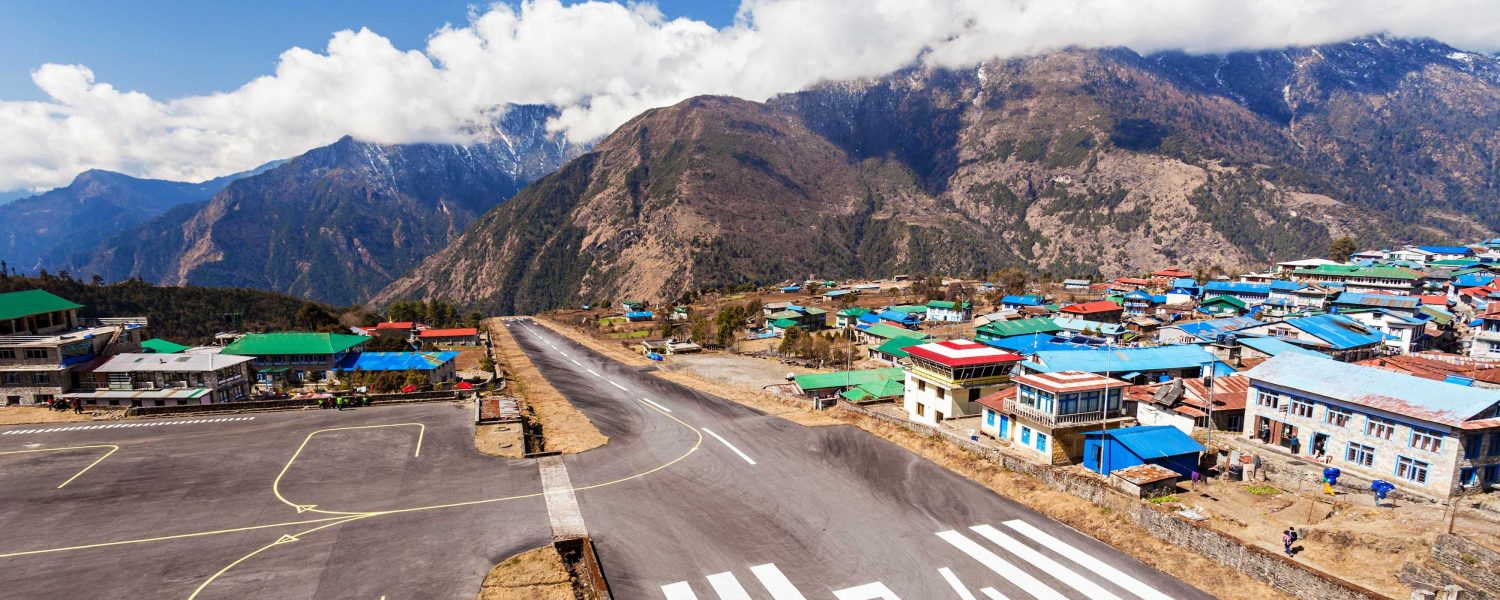
Lukla Helipad (Tenzing–Hillary Airport Area)
Lukla Helipad, located at approximately 2,860 meters, is the main operational hub for helicopter flights in the Everest region. It is used extensively for luxury helicopter transfers, rescue operations, expedition logistics, and scheduled pick-up and drop-off services. Lukla’s relatively lower altitude allows helicopters to operate with maximum payload capacity, making it an ideal staging point for higher-altitude flights.
Safety Note: Operations are subject to mountain weather and airport congestion; early morning flights are safest.
Altitude Limit: Minimal restrictions compared to upper Khumbu.
Estimated Flight Time: Lukla–Kathmandu ~45 minutes; Lukla–Namche (Syangboche) ~10–15 minutes.
Namche / Syangboche Helipad
The Syangboche Helipad above Namche Bazaar sits at around 3,440 meters and serves as a key location for medical evacuations, acclimatization rescues, and luxury helicopter drop-offs. It provides convenient helicopter access to Namche Bazaar and nearby high-end lodges.
Safety Note: Wind turbulence and cloud build-up are common; flights are typically scheduled in early morning windows.
Altitude Limit: Moderate payload restrictions may apply depending on temperature and weather.
Estimated Flight Time: Lukla–Syangboche ~10 minutes; Syangboche–Kathmandu ~60 minutes.
Pheriche Helipad
Located near the Himalayan Rescue Association (HRA) aid post at 4,371 meters, Pheriche Helipad is one of the most important medical evacuation helipads in the Everest region. It is frequently used for emergency evacuations related to altitude sickness, injuries, and fatigue from surrounding areas such as Dingboche and Lobuche.
Safety Note: Thin air significantly reduces helicopter performance; only experienced high-altitude pilots operate here.
Altitude Limit: Strict payload limits; sometimes one or two passengers per flight.
Estimated Flight Time: Pheriche–Lukla ~20–25 minutes; Pheriche–Kathmandu ~70 minutes.
Dingboche Helipad
Dingboche Helipad lies at approximately 4,410 meters and is a major high-altitude rescue and evacuation point on the Everest Base Camp trekking route. It is also occasionally used for luxury helicopter pick-up services, particularly for trekkers wishing to shorten their return journey.
Safety Note: Rapid weather changes and strong valley winds require precise flight timing.
Altitude Limit: Payload is limited; flights may require staging through Lukla or Pheriche.
Estimated Flight Time: Dingboche–Lukla ~15 minutes; Dingboche–Kathmandu ~75 minutes.
Gorakshep Helipad
At an elevation of approximately 5,164 meters, Gorakshep Helipad is among the highest operational helicopter landing sites in Nepal. It is primarily used for extreme high-altitude rescue missions and emergency evacuations from Everest Base Camp.
Safety Note: Operations are highly weather-sensitive and depend on wind, visibility, and oxygen performance limits; landings are strictly controlled.
Altitude Limit: Very strict payload restrictions; often requires split-load or shuttle operations.
Estimated Flight Time: Gorakshep–Lukla ~30 minutes; Gorakshep–Kathmandu ~90 minutes.
Everest Base Camp Helipad (Seasonal)
The Everest Base Camp helipad is a temporary, seasonal landing zone established mainly during the spring climbing season at an altitude of around 5,364 meters. It is used almost exclusively for expedition logistics and emergency evacuations, rather than commercial luxury operations.
Safety Note: Glacier movement, unstable terrain, and extreme altitude make operations highly technical; only expert crews are authorized.
Altitude Limit: Extremely restricted payload; sometimes limited to single-passenger evacuation.
Estimated Flight Time: EBC–Lukla ~15–20 minutes; EBC–Kathmandu ~90 minutes.
Why This Matters for Travelers
- Ensures safe helicopter planning in high-altitude environments
- Helps travelers understand altitude limitations and realistic flight timing
- Supports luxury heli trekking itineraries and emergency preparedness
Everest Base Camp Trek with Helicopter Return
- Day 01: Arrival in Kathmandu – Trip briefing
- Day 02: Fly to Lukla – Trek to Phakding
- Day 03: Phakding to Namche Bazaar
- Day 04: Acclimatization at Namche
- Day 05: Namche to Tengboche
- Day 06: Tengboche to Dingboche
- Day 07: Acclimatization at Dingboche
- Day 08: Dingboche to Lobuche
- Day 09: Lobuche – Gorakshep – Everest Base Camp
- Day 10: Helicopter flight from Gorakshep / EBC to Kathmandu
Saves 3–4 trekking days ? Scenic Himalayan aerial views ? Ideal for luxury trekkers, seniors & tight schedules
Everest Helicopter Pick-Up and Drop-Off Service
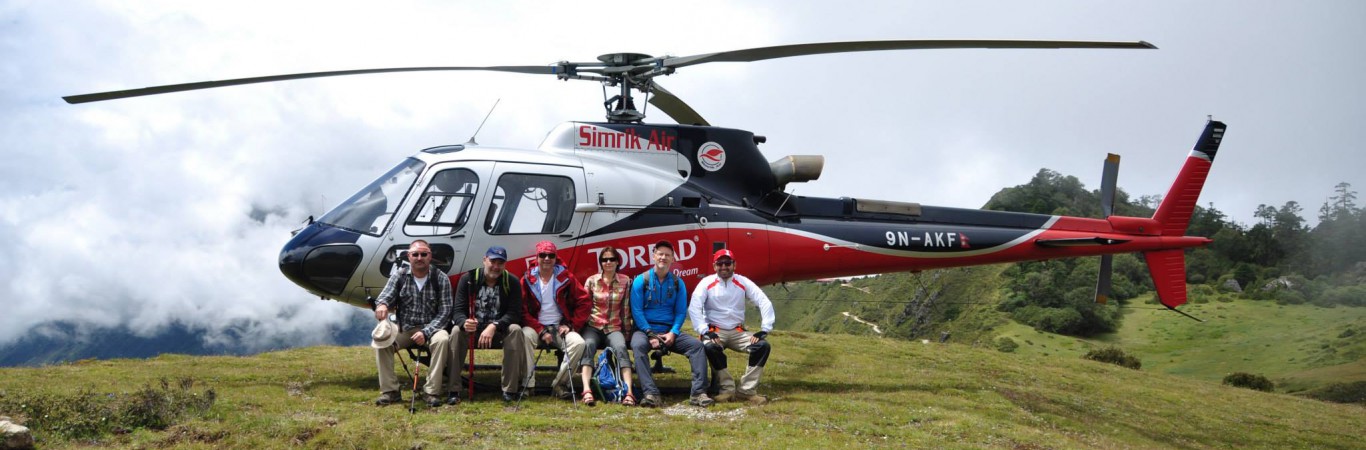
If you are trekking in the Everest region and looking for a fast, safe, and reliable way to travel between Kathmandu, Lukla, and remote locations in Khumbu, our Everest Helicopter Pick-Up and Drop-Off service is the ideal solution. Designed for trekkers, climbers, and luxury travelers, this service allows you to save time, avoid long return treks, and travel comfortably through Nepal’s high Himalaya. Whether you want to start your trek from a higher altitude, return quickly after completing your journey, or require urgent evacuation, our helicopter transfers ensure smooth coordination, experienced pilots, and well-maintained aircraft suitable for high-altitude operations.
| Route | Flight Time | Capacity | Price (Charter) | Price (Per Person) |
|---|---|---|---|---|
| Namche ↔ Lukla | ~10 minutes | Up to 5 | USD 600 | USD 200 |
| Syangboche ↔ Lukla | ~15 minutes | Up to 5 | USD 750 | USD 150 |
| Dingboche ↔ Lukla | ~15 minutes | Up to 5 | USD 1,250 | USD 350 |
| Pheriche ↔ Lukla | ~15 minutes | Up to 5 | USD 1,300 | — |
| Gorakshep ↔ Lukla | ~30 minutes | Up to 5 | USD 1,500 | USD 350 |
| Everest Base Camp ↔ Lukla (Seasonal) | ~15–20 minutes | Up to 5 | USD 1,400 | USD 300 |
| Namche ↔ Kathmandu | ~60 minutes | Up to 5 | USD 2,800 | USD 600 |
| Pheriche ↔ Kathmandu | ~70 minutes | Up to 5 | USD 3,500 | USD 750 |
| Dingboche ↔ Kathmandu | ~75 minutes | Up to 5 | USD 3,000 | USD 750 |
| Lobuche ↔ Kathmandu | ~1 hour 45 minutes | Up to 5 | USD 3,200 | USD 700 |
| Gorakshep ↔ Kathmandu | ~90 minutes | Up to 5 | USD 3,600 | USD 1,100 |
| Gokyo ↔ Kathmandu | ~90 minutes | Up to 5 | USD 3,500 | USD 800 |
| Lukla ↔ Kathmandu | ~45 minutes | Up to 5 | USD 3,000 | USD 500 |
What Is Everest Helicopter Pick-Up and Drop-Off?
This service allows trekkers to be picked up from anywhere in the Everest region—including Everest Base Camp, Gorakshep, Lobuche, Dingboche, Pheriche, Namche Bazaar, or Gokyo—and transferred directly to Lukla or Kathmandu in the shortest possible time.
Likewise, travelers can be dropped off from Kathmandu or Lukla to their preferred trekking point, enabling them to skip lower sections of the trail and begin trekking at higher elevations.
This option is ideal for travelers who:
-
Want to save trekking days
-
Need medical evacuation or emergency support
-
Prefer a comfortable return after a long trek
-
Are on tight schedules or luxury itineraries
How Everest Helicopter Pick-Up & Drop-Off Works
A) Pick-Up from Everest Region → Lukla or Kathmandu
Pre-Booking & Details
Provide your preferred date, time window, pick-up location (approved helipad or landmark with map pin), destination, number of passengers, and estimated total weight including baggage.
Route & Helipad Confirmation
We verify the safest available helipad (Gorakshep, Lobuche, Pheriche, Dingboche, Tengboche, Namche, Gokyo, etc.) and plan staging via Lukla if required due to altitude limits.
Quotation & Confirmation
You receive a clear, fixed quote. After payment confirmation, passenger details are submitted for the flight manifest.
Scheduling & Coordination
Flights are usually scheduled in the morning for best weather conditions. Timing is reconfirmed one day prior.
Landing, Briefing & Flight
After a short safety briefing, passengers board as instructed by the crew. The flight proceeds directly or via a brief shuttle if necessary.
B) Drop-Off from Kathmandu or Lukla → Everest Region
Passengers check in at the Kathmandu heliport or Lukla helipad 45–60 minutes before departure. After weight verification and safety briefing, the helicopter departs for the designated helipad or nearest safe landing site. Upon arrival, gear is offloaded, allowing trekkers to start their trek immediately.
Important Operational Notes
- This is a pre-booked helicopter transfer service, not an emergency rescue.
- All flights are weather and visibility dependent.
- High altitude significantly reduces payload; split-load flights may be required.
- Only soft duffel bags are allowed.
- Passengers should remain reachable by phone or WhatsApp.
Why Choose Everest Helicopter Pick-Up & Drop-Off?
- Time-Saving: Reach or return from remote trekking points in minutes
- Flexible & Customizable: Choose your own pick-up and drop-off locations
- Safe & Reliable: Operated by experienced high-altitude pilots
- Emergency Support: Fast response for altitude sickness or injuries
- Comfort & Convenience: Ideal after completing long treks
Cost of Everest Helicopter Pick-Up and Drop-Off
The cost depends on the route, altitude, number of passengers, and flight type (private or shared). Prices generally range between USD 500 and USD 4,500, depending on distance and conditions. For an exact quote and availability, please contact our team, and we will assist you in choosing the most efficient and cost-effective helicopter option for your Everest journey.
Important Operational Notes
- All flights are weather-dependent and operated in morning windows
- Payload restrictions apply above 4,000 m
- Some locations require staging via Lukla
- Soft bags only – no loose items on helipad
Frequently Asked Questions (FAQ)
Is helicopter landing allowed at all helipads year-round?
No. Lower-altitude helipads like Lukla and Namche operate more regularly, while high-altitude helipads such as Gorakshep and Everest Base Camp are highly seasonal and weather-dependent.
Can helicopters land directly at Everest Base Camp?
Yes, but only seasonally (mainly spring) and primarily for expedition logistics and emergency evacuation. Luxury or sightseeing landings are extremely limited.
Is helicopter rescue guaranteed in the Everest region?
Helicopter rescue is possible but not guaranteed. Flights depend on weather, visibility, payload limits, and aviation safety regulations.
Do helicopters fly in bad weather or snowfall?
No. Helicopter flights in the Himalayas operate strictly under Visual Flight Rules (VFR). Poor visibility, strong winds, snow, or cloud cover can cause delays or cancellations.
How many passengers can fly at high altitude?
At higher elevations, helicopters often carry fewer passengers (1–3) or operate split-load flights due to reduced engine performance.
Is travel insurance mandatory for helicopter evacuation?
Yes. All trekkers should carry comprehensive travel insurance covering high-altitude helicopter evacuation up to 6,000 meters.
Safety Disclaimer (Important)
Helicopter operations in the Everest region involve high-altitude aviation risks. All flights are subject to:
- Weather and visibility conditions
- Aircraft performance limits at altitude
- Air Traffic Control (ATC) and Civil Aviation Authority of Nepal (CAAN) regulations
Flight schedules, routes, and landing permissions may change without notice to ensure passenger safety. Helicopter operators reserve the right to delay, reroute, stage, or cancel flights if conditions are not safe.
Suggestions for International Travelers
- Plan buffer days in Kathmandu for weather delays
- Choose morning flight windows (best conditions)
- Carry soft duffel bags (no hard suitcases)
- Keep passport, insurance details, and emergency contacts accessible
- Use reputable trekking agencies and helicopter operators with high-altitude experience
Luxury travelers are advised to consider heli-assisted itineraries to reduce trekking days and physical strain.
Suggestions for FIT (Free Independent Travelers)
- Always register your trek route and emergency contact
- Inform your lodge or guide before requesting a helicopter
- Be realistic about altitude limitations—descending early is safer than waiting
- Avoid last-minute evacuation requests during poor weather
- Confirm payment method and insurance authorization in advance
FIT trekkers should strongly consider trekking with licensed local agencies for smoother coordination in case of emergencies.
Final Note
Helicopter services in the Everest region are an essential safety lifeline and a premium travel option when planned responsibly. Understanding helipad locations, altitude limits, costs, and safety procedures ensures a safe, efficient, and unforgettable Himalayan experience.
Recent From Blogs
24 Dec 2022
29 Mar 2023
29 Mar 2023
03 Apr 2023
03 Apr 2023
04 Apr 2023
05 Apr 2023
26 Jun 2023
03 Jul 2023