Tal to an Expert ( Team )

 Best price guaranteed No booking fees Safe Trip Plan
Based on 341 Reviews

The towering beauty of Mera Peak, one of Nepal’s most prominent trekking peaks, stands tall at an elevation of 6,476 meters (21,247 ft) in the Himalayas. It offers adventure seekers a challenging yet attainable mountaineering experience, with a rewarding view of five of the world’s highest peaks: Mount Everest, Kanchenjunga, Lhotse, Makalu, and Cho Oyu. However, as thrilling as Mera Peak is for climbers, the ascent is not without its dangers, and sometimes the challenges posed by altitude, weather, and health require swift and decisive rescue operations. One of the most critical tools in these life-saving efforts is the helicopter rescue service.
Mera Peak has become a sought-after destination for mountaineers due to its relatively accessible climbing route, making it a popular choice for both amateur and experienced climbers. Despite being labeled as a "trekking peak," Mera Peak's high altitude demands respect. The journey to its summit is filled with steep ascents, harsh winds, and the thin oxygen at high altitudes. This has led to an increasing number of altitude-related issues such as Acute Mountain Sickness (AMS), frostbite, and physical exhaustion, where quick evacuation is necessary.
At high altitudes like Mera Peak, even experienced climbers can fall prey to the effects of altitude sickness. The reduced oxygen levels make it harder to breathe, leading to symptoms like dizziness, nausea, and extreme fatigue. In severe cases, it can escalate to High Altitude Pulmonary Edema (HAPE) or High Altitude Cerebral Edema (HACE), both of which can be life-threatening if not treated immediately. In such emergencies, the only solution is a rapid descent to lower altitudes. But when walking or trekking becomes impossible, a helicopter rescue becomes the only viable option.
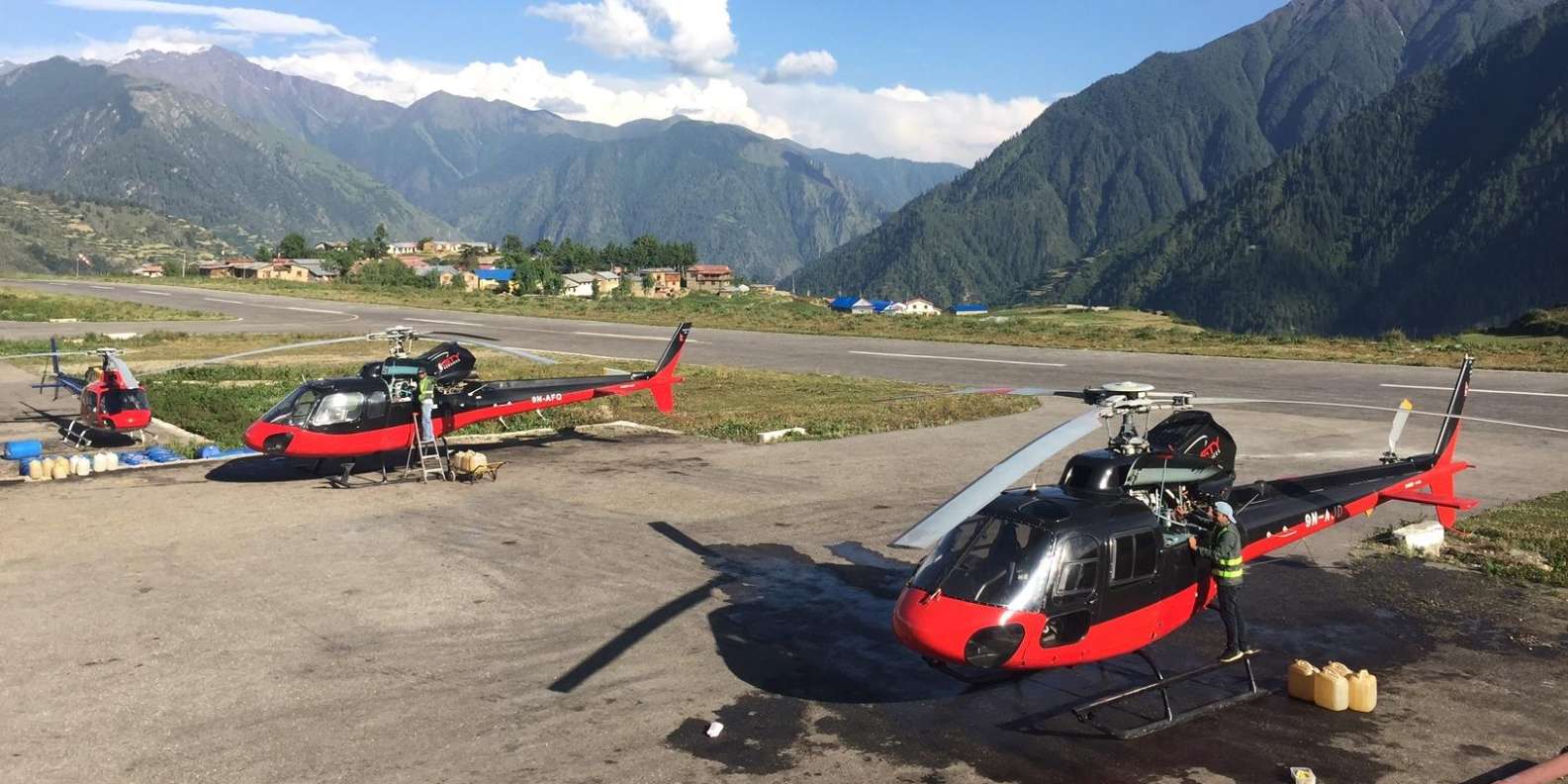
Nepal has a robust and efficient helicopter rescue system, and it is one of the few places in the world where such rescues are common in mountaineering. Helicopter rescues on Mera Peak are initiated when climbers or guides raise the alarm through satellite phones or two-way radios. Local rescue teams, highly experienced in mountainous terrains, quickly assess the situation and dispatch helicopters from nearby locations like Lukla or Kathmandu.
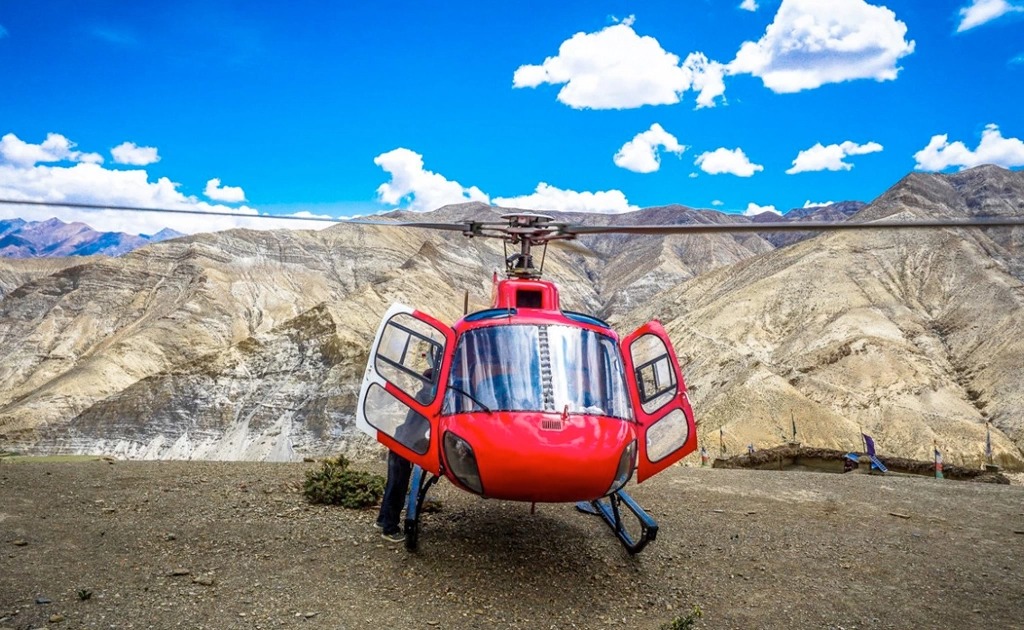
The helicopters themselves are specially designed for high-altitude flights. They are lightweight, powerful, and capable of hovering at extreme altitudes where the air is thin. The pilots operating these helicopters are among the most skilled in the world, navigating dangerous terrain, unpredictable weather conditions, and narrow landing zones to save lives.
Assessment: Once the call for rescue is made, the operator assesses the severity of the situation. Altitude sickness, broken limbs, frostbite, or exhaustion may warrant an immediate helicopter evacuation.
Weather Check: Helicopter rescues depend heavily on weather conditions. If the weather is poor with high winds, snow, or low visibility, rescues might be delayed, adding to the urgency of the situation.
Dispatch: A helicopter is dispatched from either Kathmandu or a nearby rescue base. The pilot, along with a rescue team or a medical officer, heads toward Mera Peak.
Landing or Hovering: Due to the difficult terrain, landing on the mountain may not always be possible. In such cases, helicopters perform "hover rescues," where the helicopter hovers just above the ground while the rescue team pulls the injured or ill climber aboard.
Immediate Descent: After picking up the climber, the helicopter immediately descends to lower altitudes, often taking the patient to a medical facility in Kathmandu or Lukla for treatment.
One memorable Mera Peak rescue took place in 2021 when a group of climbers found themselves in a dire situation after reaching the summit. Despite being seasoned adventurers, two members of the group began showing severe signs of HAPE, with fluid accumulating in their lungs. Their breathing became increasingly labored, and they were unable to descend the peak on foot.
With the situation rapidly deteriorating, the team contacted a local trekking agency using a satellite phone. Within hours, a rescue helicopter was dispatched from Lukla, and despite the harsh weather conditions and narrow landing zones, the pilot managed to hover just long enough for the climbers to be evacuated. Thanks to the swift response and coordination, the two climbers were safely brought to lower altitudes, where they were treated for altitude sickness and made a full recovery.
Given the high cost of helicopter rescues—ranging from $4,000 to $6,000 depending on the location and altitude—having travel insurance that covers high-altitude helicopter evacuations is essential. Many trekkers and climbers underestimate the dangers of altitude and the potential need for rescue, but a single rescue flight can be the difference between life and death in the Himalayas.
Climbing Mera Peak is an extraordinary experience, offering breathtaking views and the thrill of adventure in one of the world's most beautiful landscapes. But it also serves as a stark reminder of the unpredictable dangers of high-altitude trekking. Helicopter rescues are a vital lifeline for those in peril, and the men and women who pilot these missions embody the courage and skill needed to save lives under some of the harshest conditions on Earth.
For anyone planning to climb Mera Peak, preparation is key—physically, mentally, and logistically. That includes understanding the risks, knowing the signs of altitude sickness, and ensuring that you have proper insurance. Because when you're at the mercy of the mountains, having access to a helicopter rescue can be the difference between making it home or not. We wish for your successful trekking in Mera Peak. If you need any help during the trek you can contact us at WhatsApp: +9779818856359
 1 Hour
Flexible Time: Mera Peak has become a sought-after destination for mountaineers due to its relatively accessible climbing route, making it a popular choice for both amateur and experienced climbers. Despite being labeled as a "trekking peak," Mera Peak's high altitude demands respect. The journey to its summit is filled with steep ascents, harsh winds, and the thin oxygen at high altitudes. This has led to an increasing number of altitude-related issues such as Acute Mountain Sickness (AMS), frostbite, and physical exhaustion, where quick evacuation is necessary.
 MEALS
MEALS  4.9 Excellent 278 Reviews form Google
A Yes, helicopter rescue from the Mera Peak region is possible, including areas such as Mera Base Camp and nearby high camps, depending on weather and landing feasibility. Because the terrain is glacial and remote, pilots carefully assess conditions before landing. In some situations, helicopters may land slightly below the exact location or conduct a short shuttle evacuation to ensure safety.
A Helicopter rescues in the Mera Peak area are generally possible up to 5,400–5,800 meters, depending on aircraft performance, weather, wind, and payload. Rescues from very high camps may require single-passenger lifts or multiple rotations due to reduced lifting capacity at altitude.
A Once an emergency is reported and essential information is provided, helicopter rescue coordination usually begins immediately. In ideal conditions, a rescue can be arranged within 2–6 hours, though weather, visibility, and time of day play a major role. Morning flights are preferred due to calmer winds and better visibility.
A To initiate a rescue efficiently, the following details are required: Exact GPS coordinates or camp name Patient’s medical condition (AMS, HAPE, HACE, injury, exhaustion, etc.) Number of people needing evacuation Weather conditions at the site Contact details of guide or group leader Travel insurance information Providing accurate and timely information helps pilots plan the safest and fastest evacuation.
 Best price guaranteed
No booking fees
Safe Trip Plan
Best price guaranteed
No booking fees
Safe Trip Plan
Response Time 0-2 Hours , Response Rate 100%
© 2011 - 2026 All rights reserved. Nepal Chopper Pvt. Ltd.