Tal to an Expert ( Team )

 Best price guaranteed No booking fees Safe Trip Plan
Based on 341 Reviews

Mount Everest, the highest point on Earth, stands at a staggering 8,848.86 meters (29,031.7 feet) above sea level. For mountaineers, reaching its summit is a lifelong dream, a symbol of human endurance and perseverance. However, the path to Everest's summit is fraught with dangers—extreme altitude, severe weather, and challenging terrain are constant companions for those who dare attempt the climb. In this perilous environment, even the most experienced climbers can find themselves in life-threatening situations, where a rapid response is often the difference between survival and tragedy.
In such cases, helicopter rescues, particularly those conducted by skilled operators like Nepal Chopper, become the lifeline for climbers in distress. These daring rescues from the heights of Everest require a unique combination of piloting expertise, advanced technology, and an intimate understanding of the mountainous terrain. Nepal Chopper has become a pivotal part of Everest expeditions, offering not only rescue services but also playing a key role in ensuring the safety and success of climbers who take on the world’s tallest mountain.
The allure of Everest is undeniable. Thousands of climbers flock to Nepal every year to test their endurance against the mountain’s sheer height and harsh conditions. Yet, this journey to the top comes with severe risks. Many climbers face challenges like Acute Mountain Sickness (AMS), frostbite, and life-threatening injuries from falls or avalanches. With the atmosphere containing only a fraction of the oxygen available at sea level, climbers in the "Death Zone" (above 8,000 meters) risk hypoxia, where the body can no longer function properly due to lack of oxygen.
Even highly trained climbers often suffer from altitude sickness, which can rapidly progress into more serious conditions like High Altitude Pulmonary Edema (HAPE) or High Altitude Cerebral Edema (HACE). Both conditions can be fatal if not treated immediately, and descending quickly to a lower altitude is essential. In many instances, ground evacuation or trekking down is simply not an option, leaving helicopters as the only viable solution to save lives.
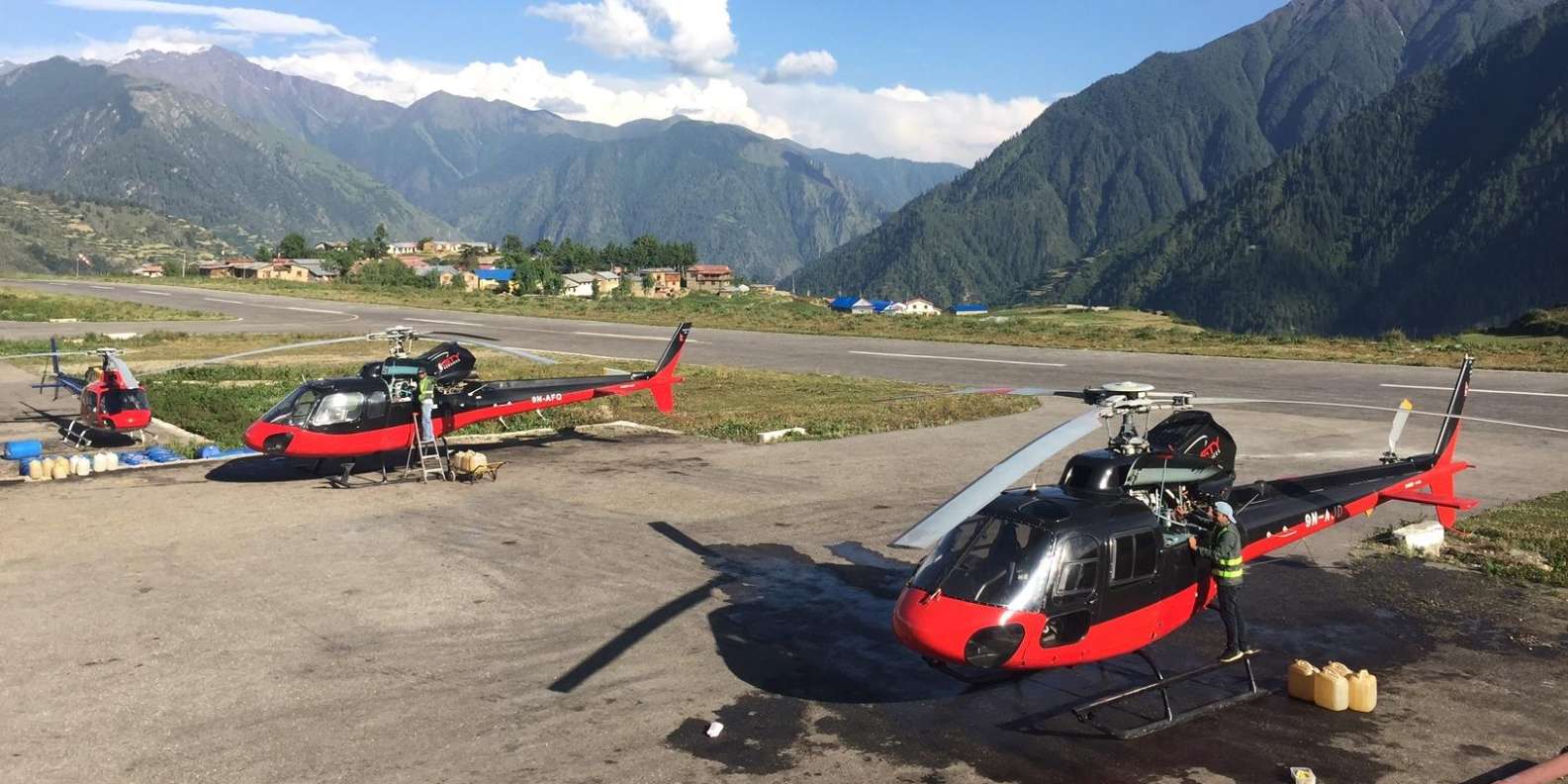
Nepal Chopper is one of the leading helicopter rescue services in the country, specializing in high-altitude extractions. With years of experience flying in the Himalayas, Nepal Chopper pilots are some of the most skilled in the world, able to navigate challenging weather patterns, thin air, and narrow valleys to reach stranded climbers.
Conducting a helicopter rescue in the Everest region requires precise coordination between pilots, ground teams, and medical professionals. Pilots need to have a deep understanding of weather patterns and wind conditions to execute safe flights, especially considering that helicopters operate at the very limits of their capacity in such low-oxygen environments.
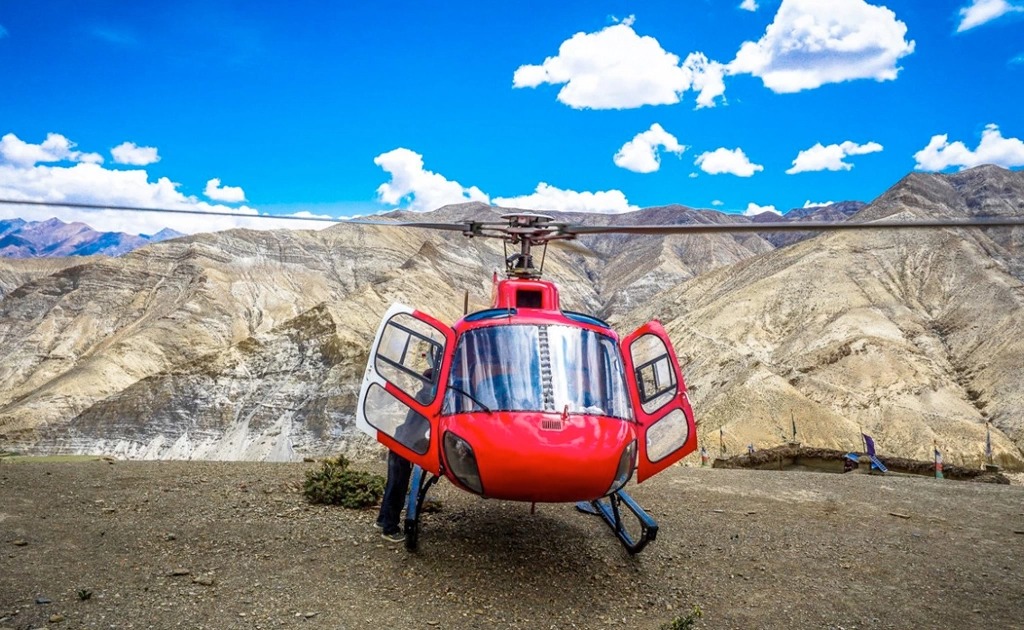
At extreme altitudes like those on Everest, helicopters face significant performance limitations due to reduced air density. Helicopter engines and rotors rely on air to generate lift and thrust, and the thin air at high altitudes can make it difficult to maintain stability or achieve proper lift. This means that only specialized helicopters, equipped with powerful engines, can operate in the Everest region. Additionally, these helicopters are often stripped down to reduce weight, allowing for greater lift capacity during high-altitude rescues.
Nepal Chopper’s fleet includes such specialized helicopters, often tailored for the specific challenges of the Himalayas. These machines are equipped to carry out rescues from Camp 2 (6,400 meters) or even higher in some cases, making Nepal Chopper an indispensable part of the safety infrastructure surrounding Everest expeditions.
Rescue operations in the Everest region are unlike any other. Aside from the altitude challenges, weather conditions on the mountain can change in a matter of minutes. Strong winds, fog, and snowstorms can make it impossible for helicopters to fly safely, let alone hover long enough for a rescue. Pilots have to be prepared for every scenario, often making split-second decisions that can save lives or prevent further complications.
Visibility is another significant challenge. With frequent whiteouts and cloud cover, pilots must rely on their deep knowledge of the terrain and advanced navigation systems. Any miscalculation can lead to disaster, as the steep slopes and rocky outcrops of Everest can create treacherous flight paths. Additionally, the margin for error in helicopter rescues at such high altitudes is minuscule, given that a fully loaded helicopter might struggle to maintain balance due to the thin air.
Moreover, landing at high altitudes is rarely possible. In many cases, Nepal Chopper must execute what is known as a "hover extraction" This involves the helicopter hovering a few feet above the ground while rescuers work to secure the climber using harnesses or cables. These hover extractions are complex and risky, requiring exceptional piloting skills and perfect coordination between the ground team and the helicopter crew.
While technology and machinery play a critical role in Everest rescues, it is ultimately the human element that ensures success. Nepal Chopper’s pilots are experienced veterans, many of whom have spent years flying in the rugged Himalayas. These pilots are often referred to as unsung heroes for their ability to perform rescues under the most challenging conditions imaginable.
Equally important are the medical teams involved in these operations. High-altitude rescues often involve treating climbers suffering from severe injuries, frostbite, or life-threatening altitude sickness. The ability to administer medical care while descending to safer altitudes is critical, and Nepal Chopper works closely with medical professionals to ensure that every rescued climber receives immediate attention.
The pilots, rescuers, and medical teams who work with Nepal Chopper are acutely aware of the stakes involved in each mission. Whether they are airlifting an injured climber from a crevasse or rushing someone suffering from HAPE down to a lower altitude, they know that time is of the essence. Every second counts when it comes to saving lives on Everest.
While Nepal Chopper is best known for its rescue operations, its role in Everest expeditions extends beyond emergency situations. Many climbers rely on helicopter services for logistics, such as transporting gear, food, and supplies to base camps and higher camps. Helicopters also assist in scouting safe routes and monitoring the mountain’s conditions, providing valuable information to expedition leaders.
During the trekking season, Nepal Chopper also offers helicopter tours, giving adventure enthusiasts the chance to witness the majesty of Everest without the need for grueling climbs. This growing facet of Nepal’s tourism industry has helped make the Himalayas more accessible to a broader range of travelers.
Rescuing climbers from Everest by helicopter is not just about technical expertise; it is about understanding the fragility of human life in one of the most extreme environments on Earth. Nepal Chopper’s commitment to safety, precision, and rapid response ensures that those who pursue their dreams of conquering Everest have a fighting chance if things go wrong.
In the end, the mountain may be the ultimate challenge, but with Nepal Chopper in the skies, climbers can face Everest with the reassurance that help is just a call away.
 1 Hour
Flexible Time: In such cases, helicopter rescues, particularly those conducted by skilled operators like Nepal Chopper, become the lifeline for climbers in distress. These daring rescues from the heights of Everest require a unique combination of piloting expertise, advanced technology, and an intimate understanding of the mountainous terrain. Nepal Chopper has become a pivotal part of Everest expeditions, offering not only rescue services but also playing a key role in ensuring the safety and success of climbers who take on the world’s tallest mountain.
 MEALS
MEALS  4.9 Excellent 278 Reviews form Google
 Best price guaranteed
No booking fees
Safe Trip Plan
Best price guaranteed
No booking fees
Safe Trip Plan
Response Time 0-2 Hours , Response Rate 100%
© 2011 - 2026 All rights reserved. Nepal Chopper Pvt. Ltd.